Support us
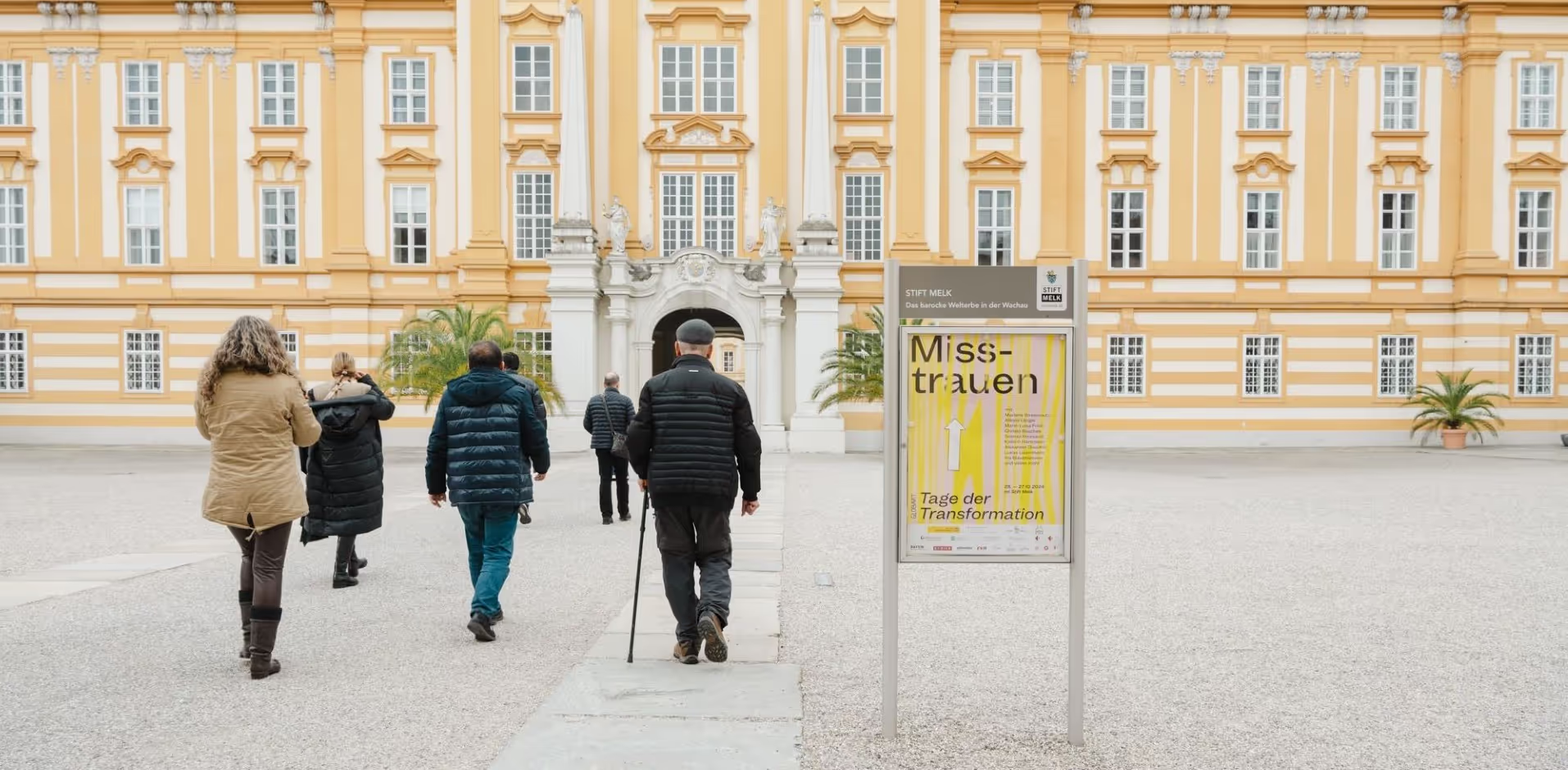
Review: Days of Transformation 2024
25
.
10
.
to
27
.
10
.
2024
Save to calendar
Button Text
Review: Days of Transformation 2024
From 25 to 27 October, we faced the provocative question at Melk Abbey of whether mistrust can also be a productive force. Together with scientists, activists and artists, we examined our critical relationship with the world. We look back with great joy on a festival full of inspiring exchange and enriching encounters!
2024-10-25
22:35
2024-10-27
1:00
Looking for mistrust, finding trust
A look back: Days of Transformation 2024
25–27 October 2024, Melk Abbey
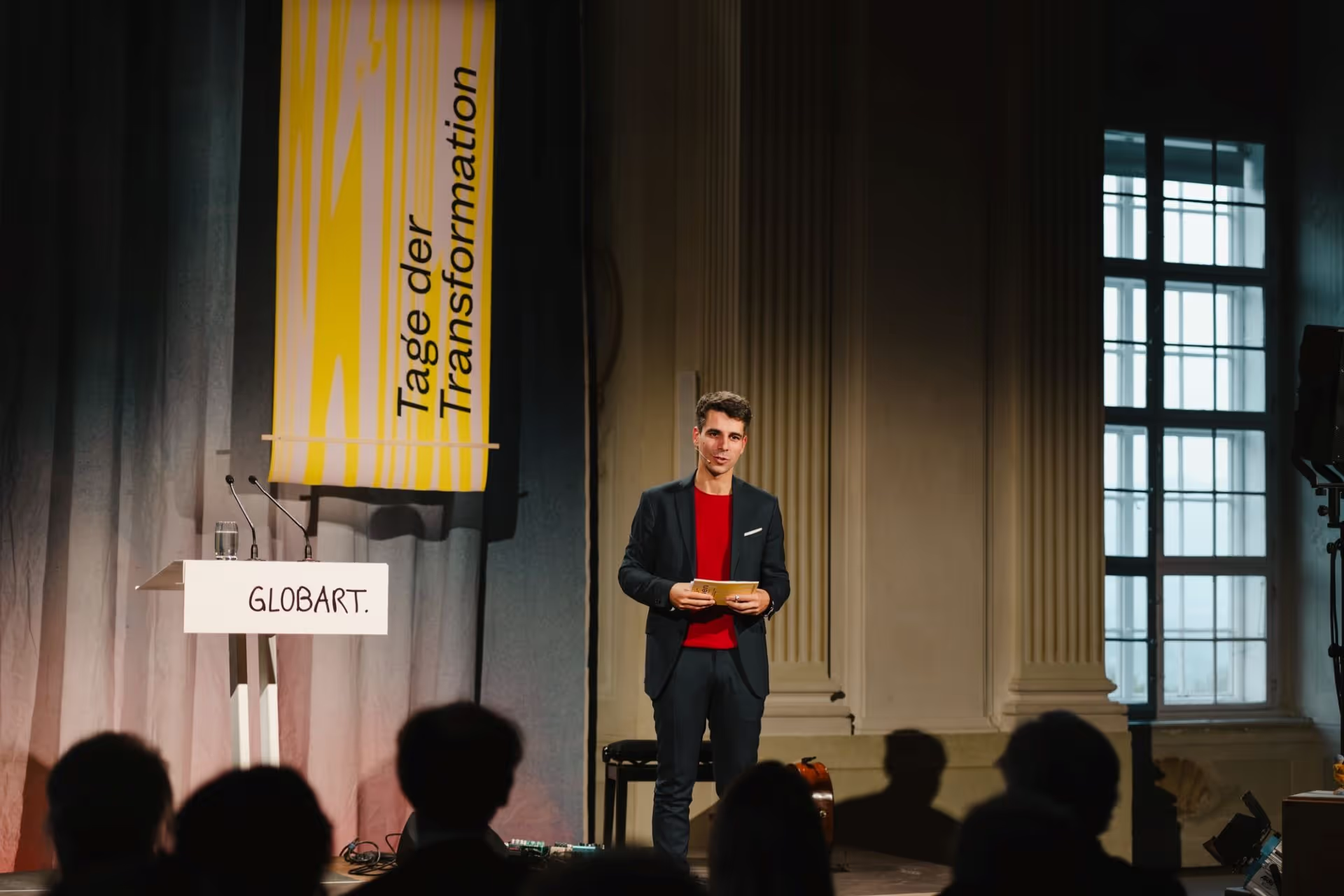
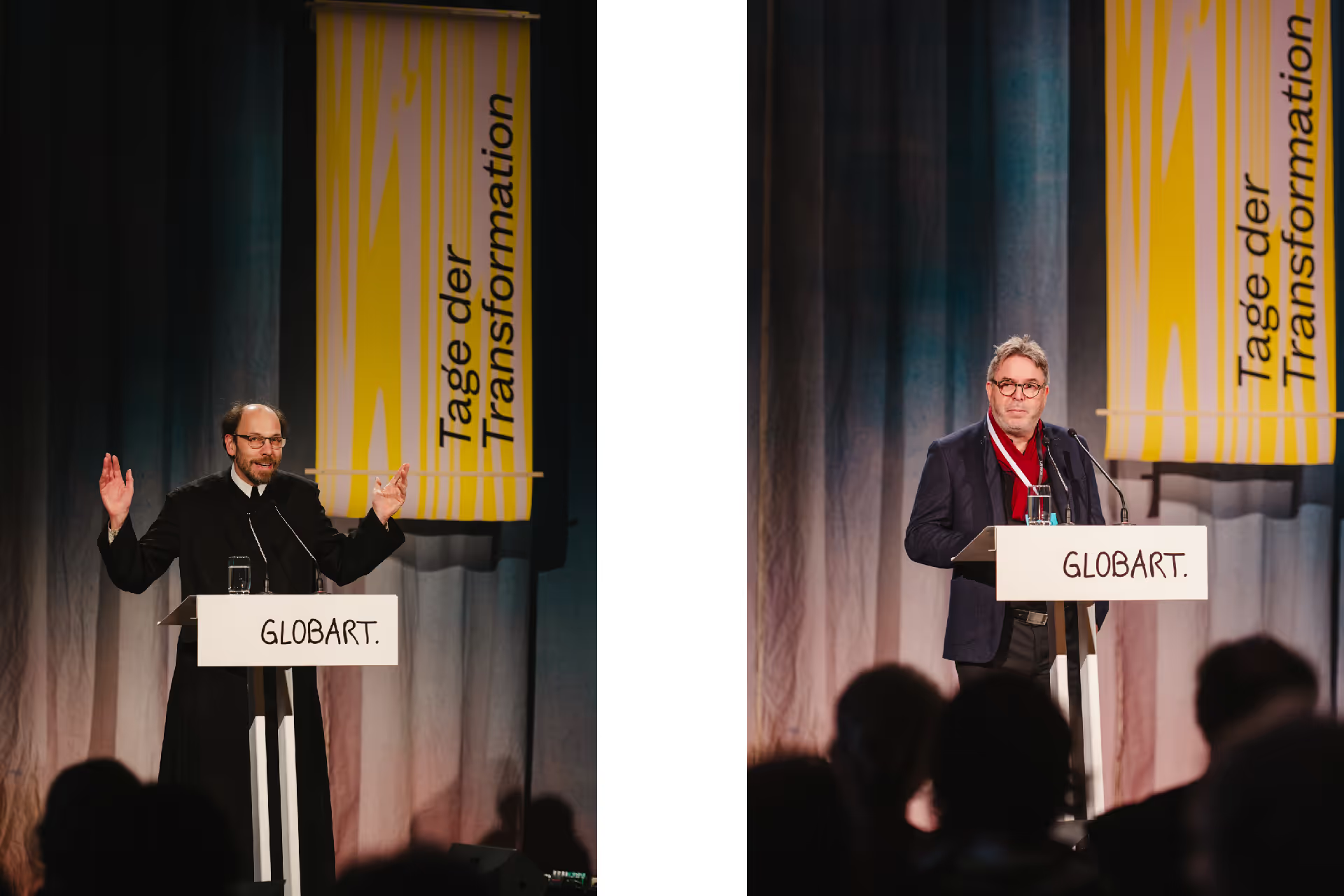
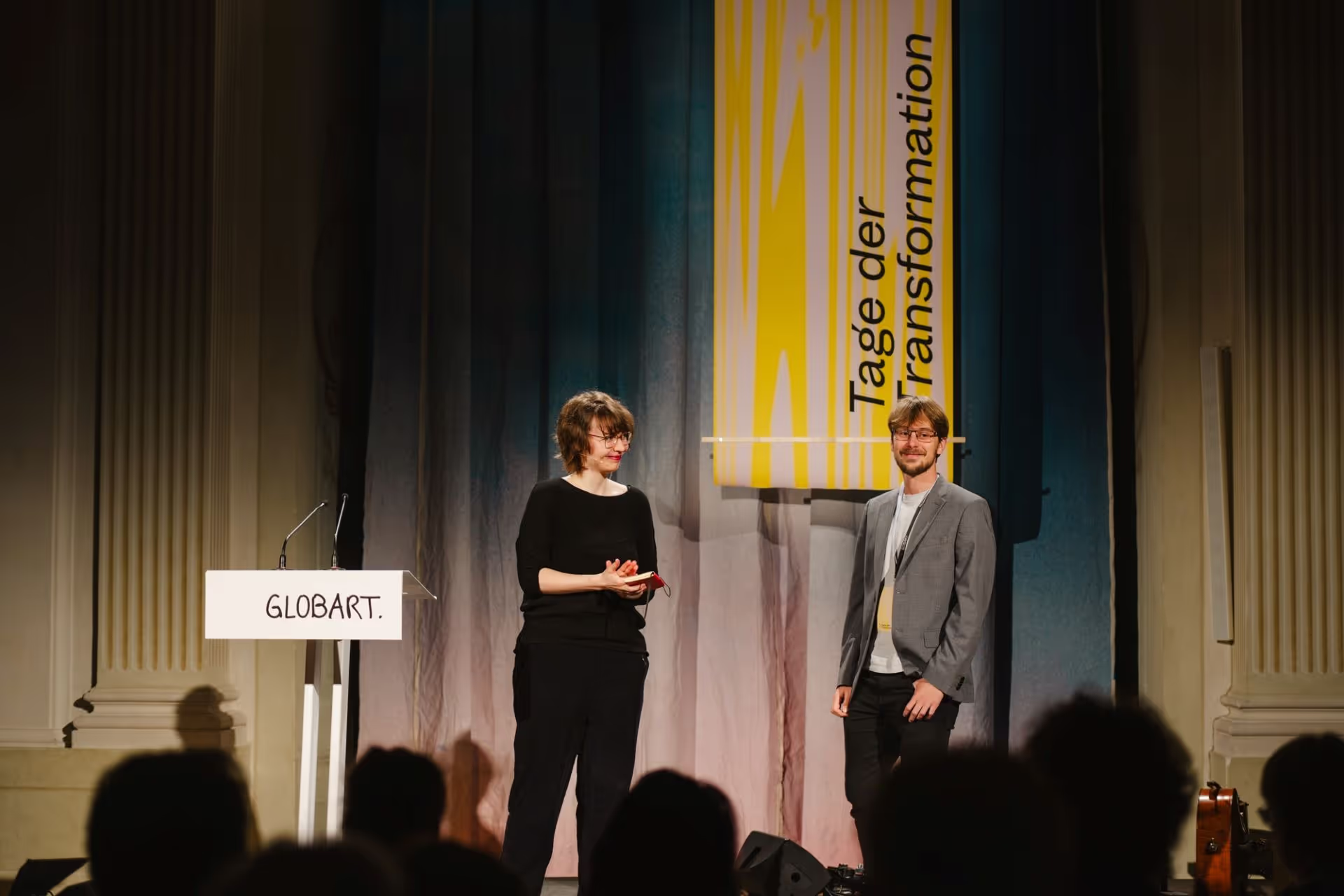
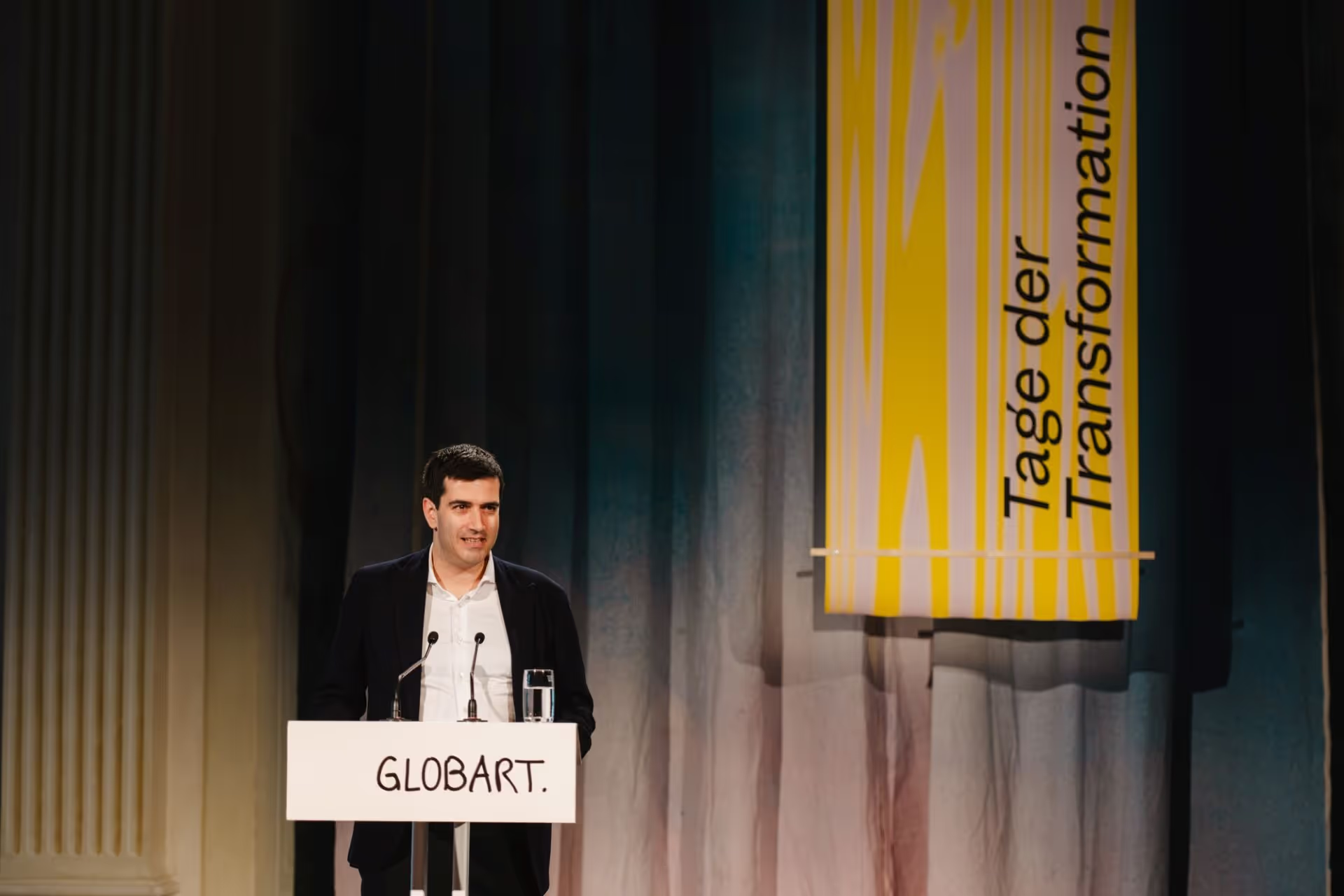
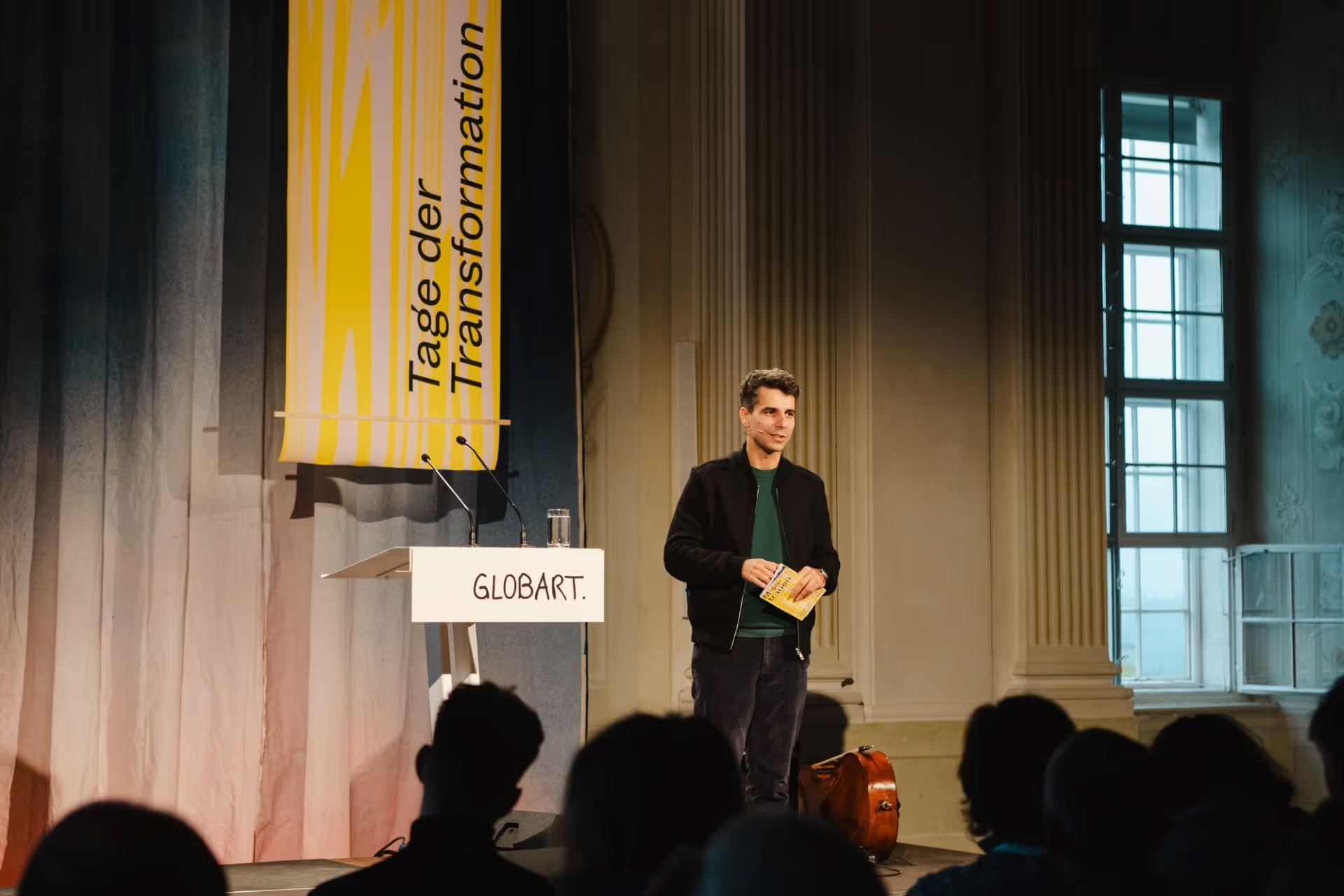
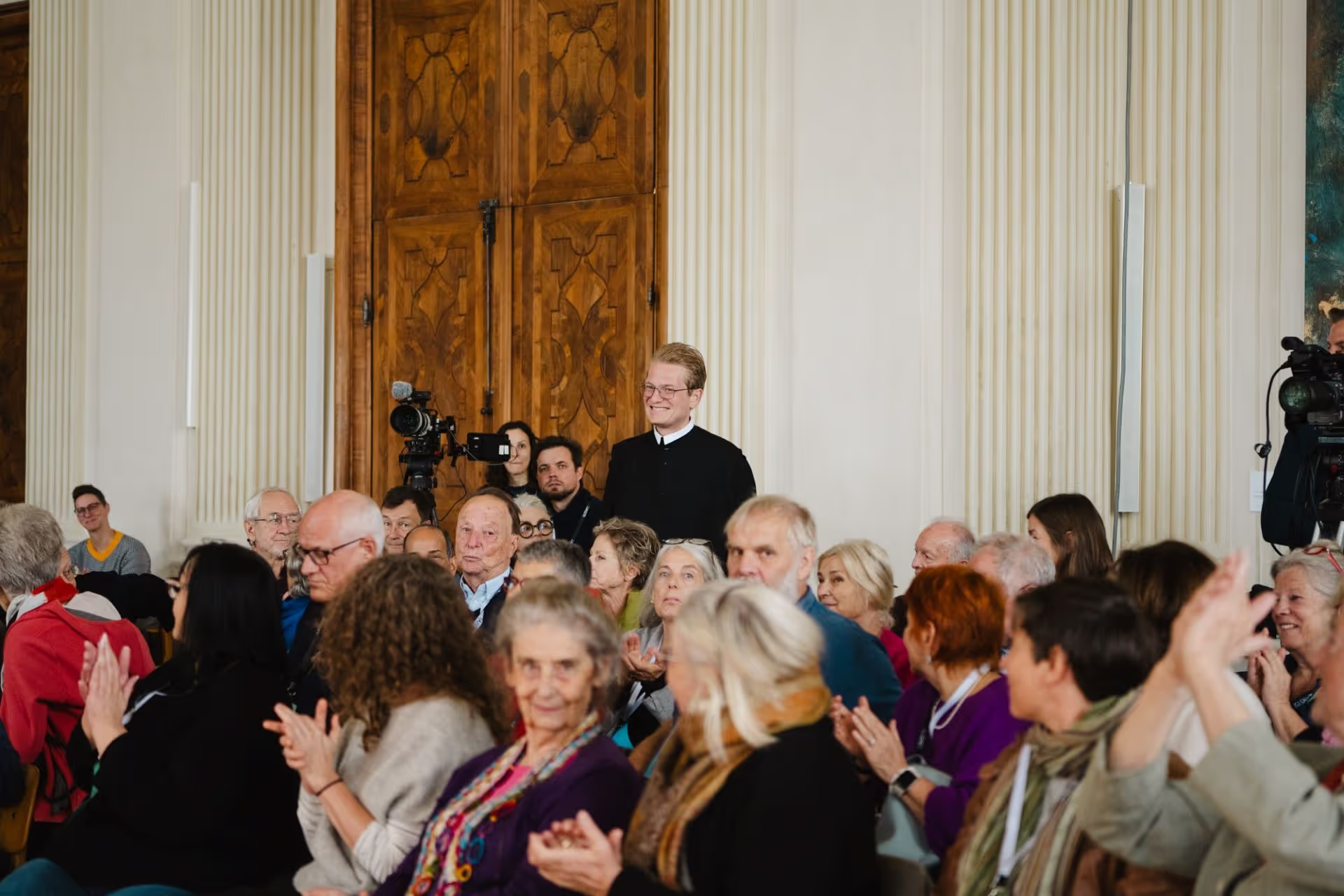
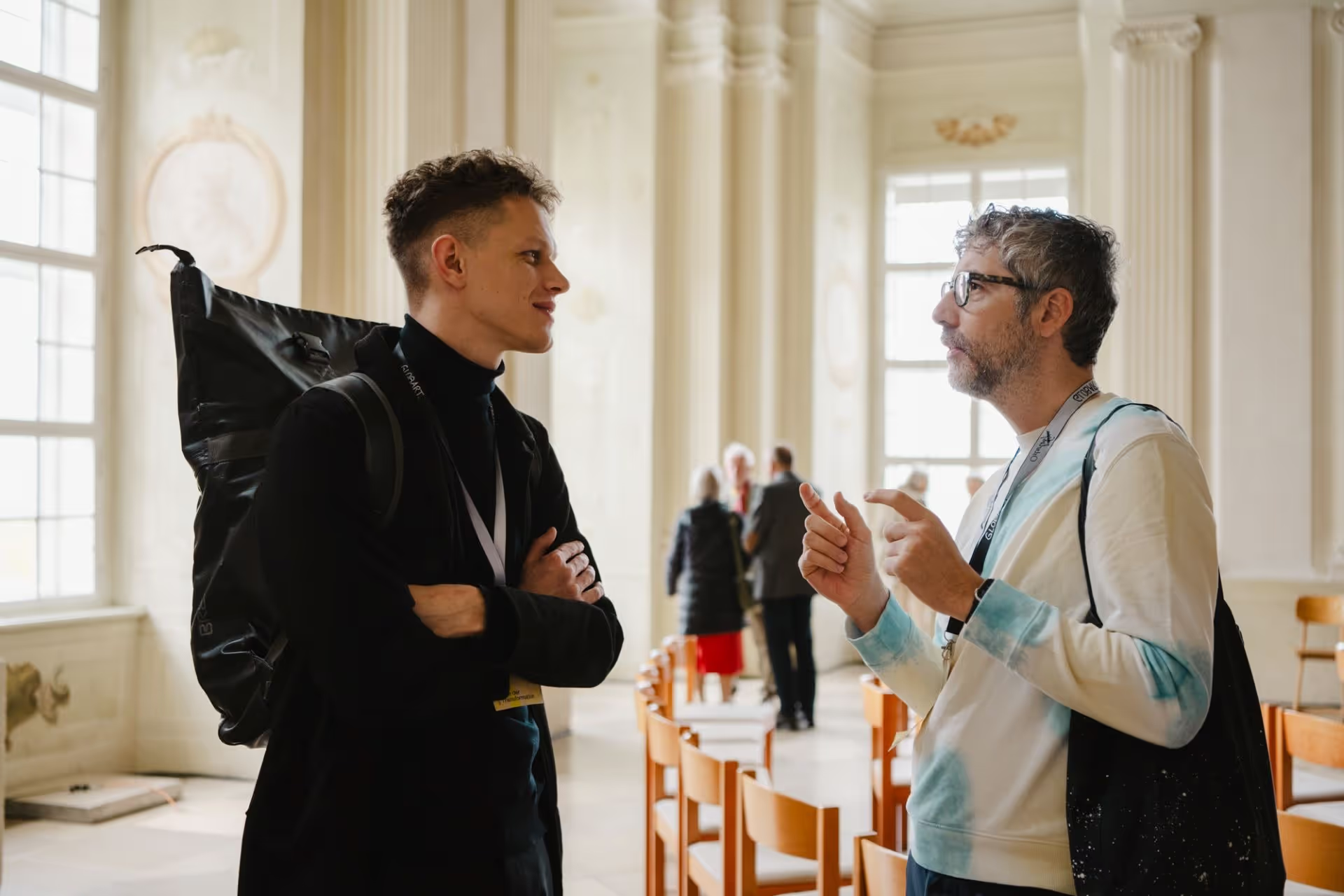
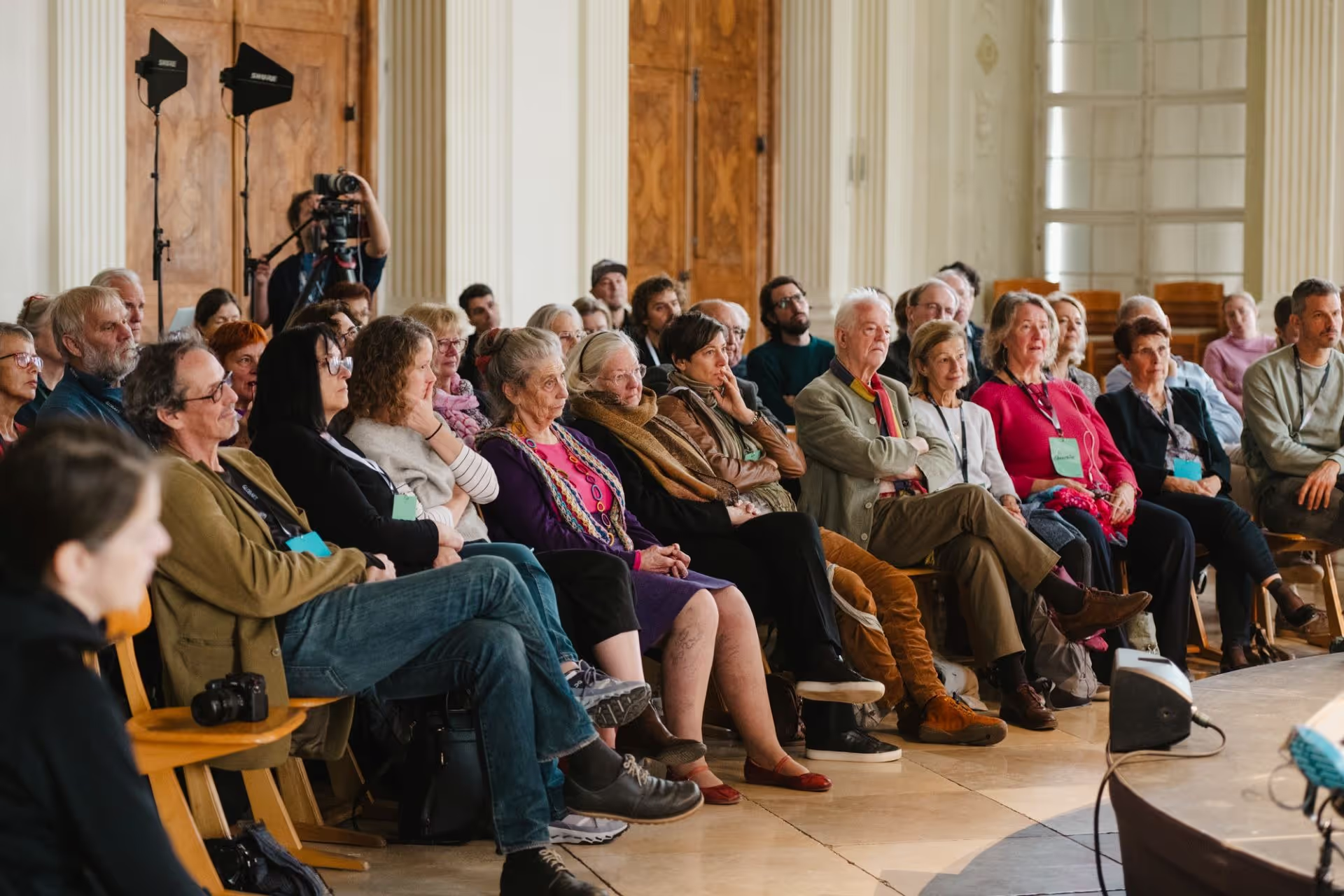
“I would like to take you along into the trust with which we at Globart develop programmes – and together find the courage to tackle challenging topics.” With these words, Artistic Director Jakob Brossmann welcomed a packed Kolomani Hall at Melk Abbey at the opening of the Days of Transformation. From 25 to 26 October 2024, numerous visitors set out within the venerable walls and baroque gardens in search of mistrust – asking about its roots, its destructive and also its constructive aspects.
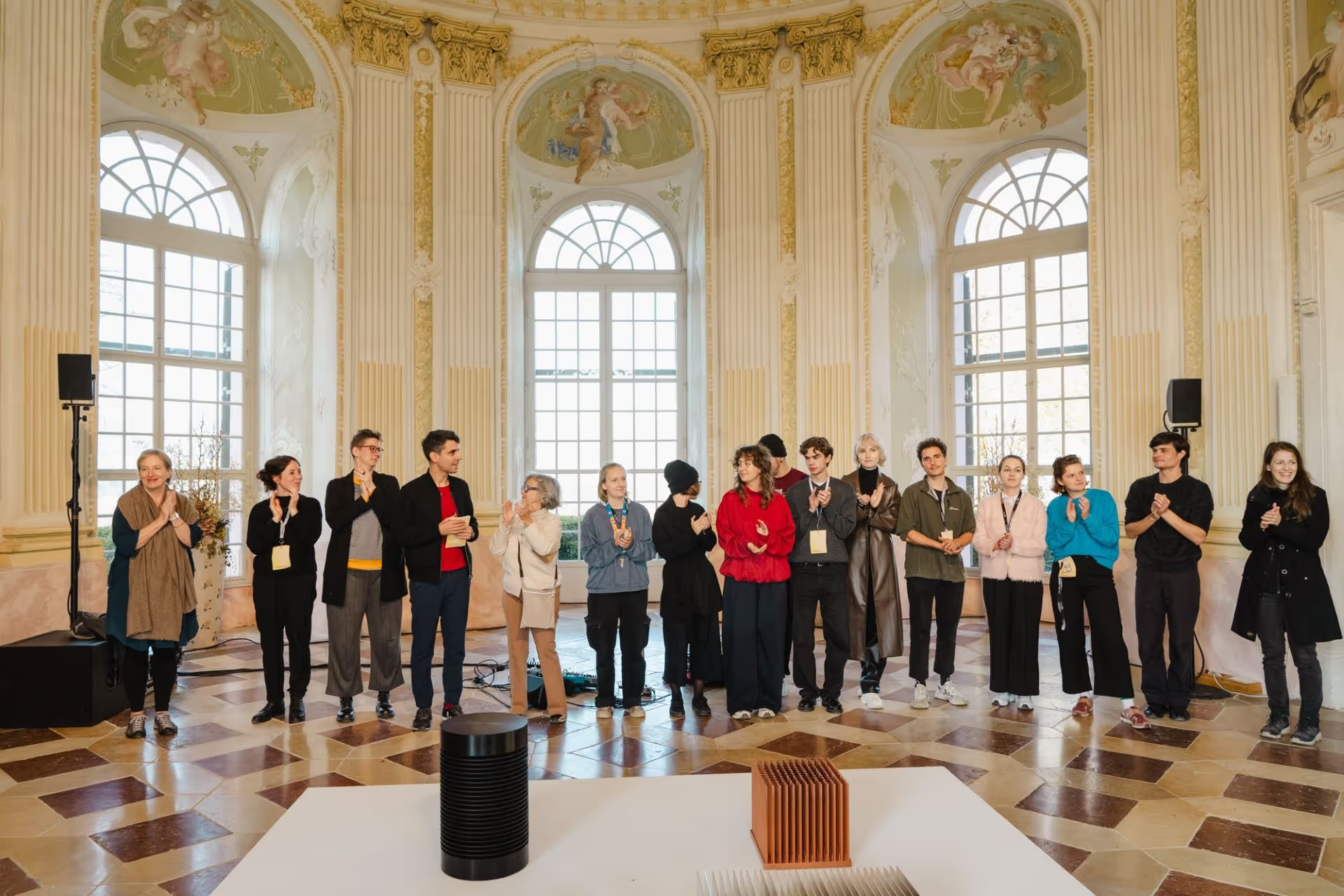
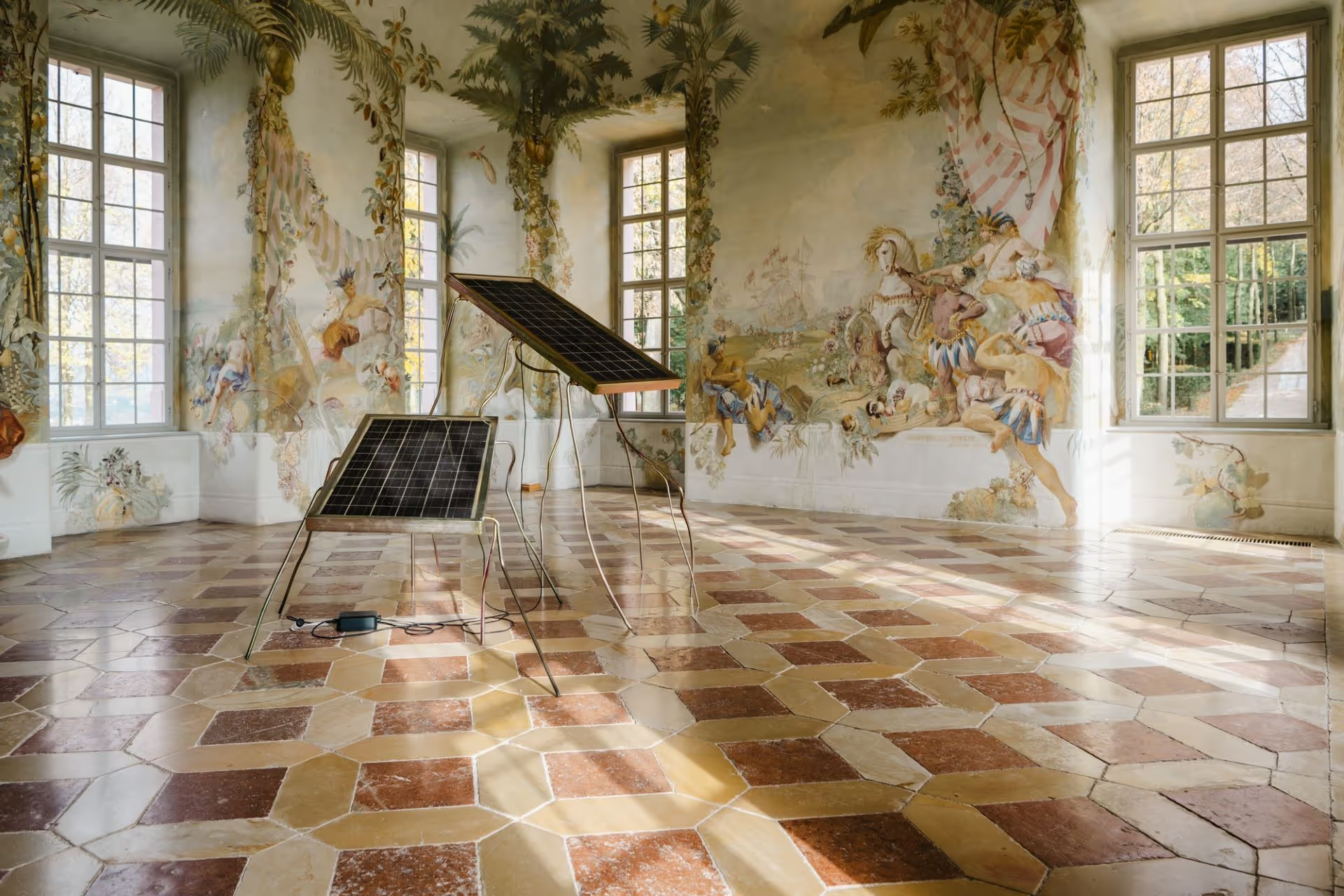
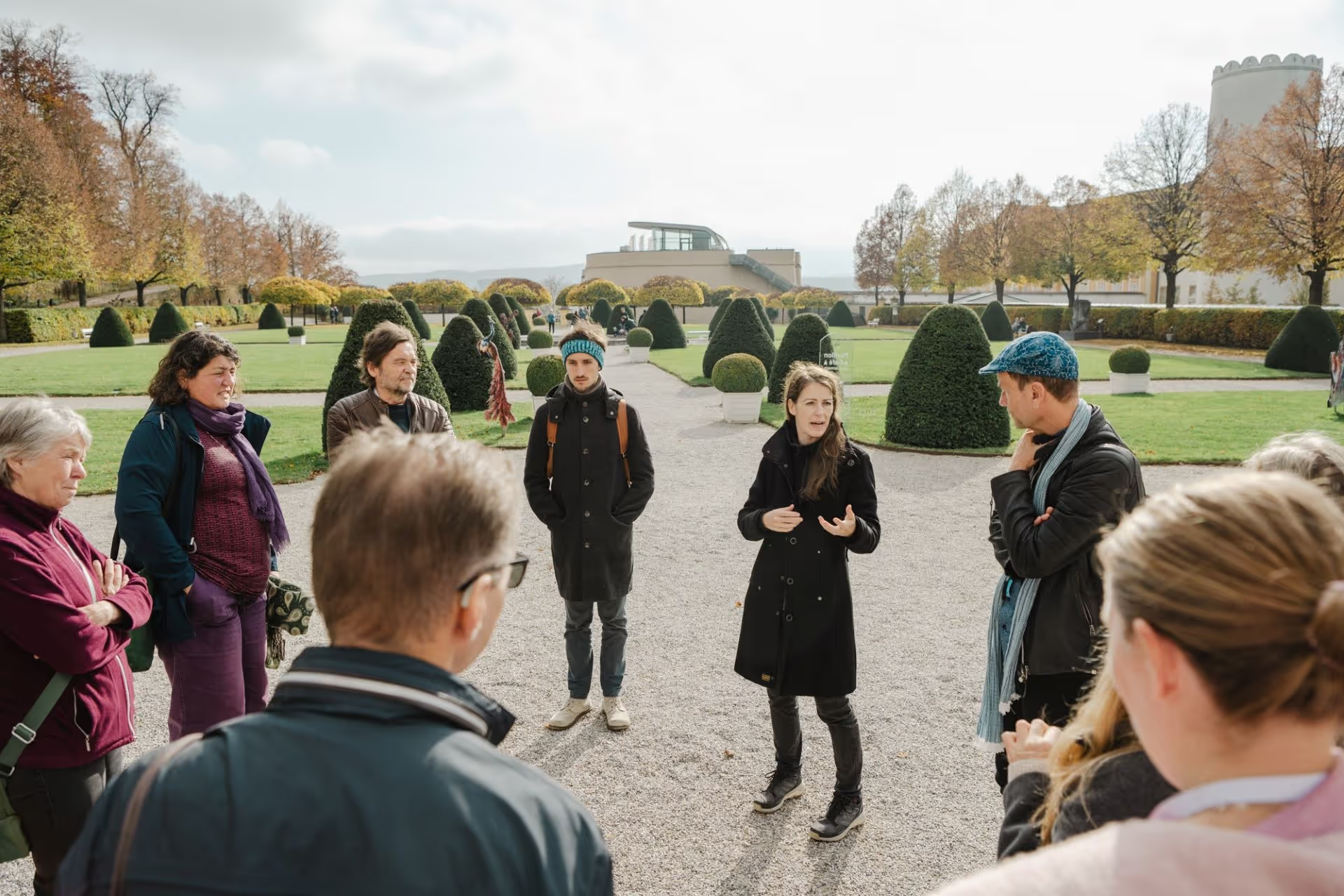
On Friday morning, 25 October, visitors had already toured the exhibition by artist Judith Fegerl in the pavilion of the abbey park, on view from 11 October to 3 November, together with the artist. The eponymous “Silent Machines” – a series of sculptures that Fegerl expanded especially for the occasion (working with epoxy paints for the first time) – take their aesthetic form from heat exchangers and cooling elements used in industry. They were the starting point for open and engaged conversations about in-between spaces and the exchange of energy and perceptions.
The cosmos of care
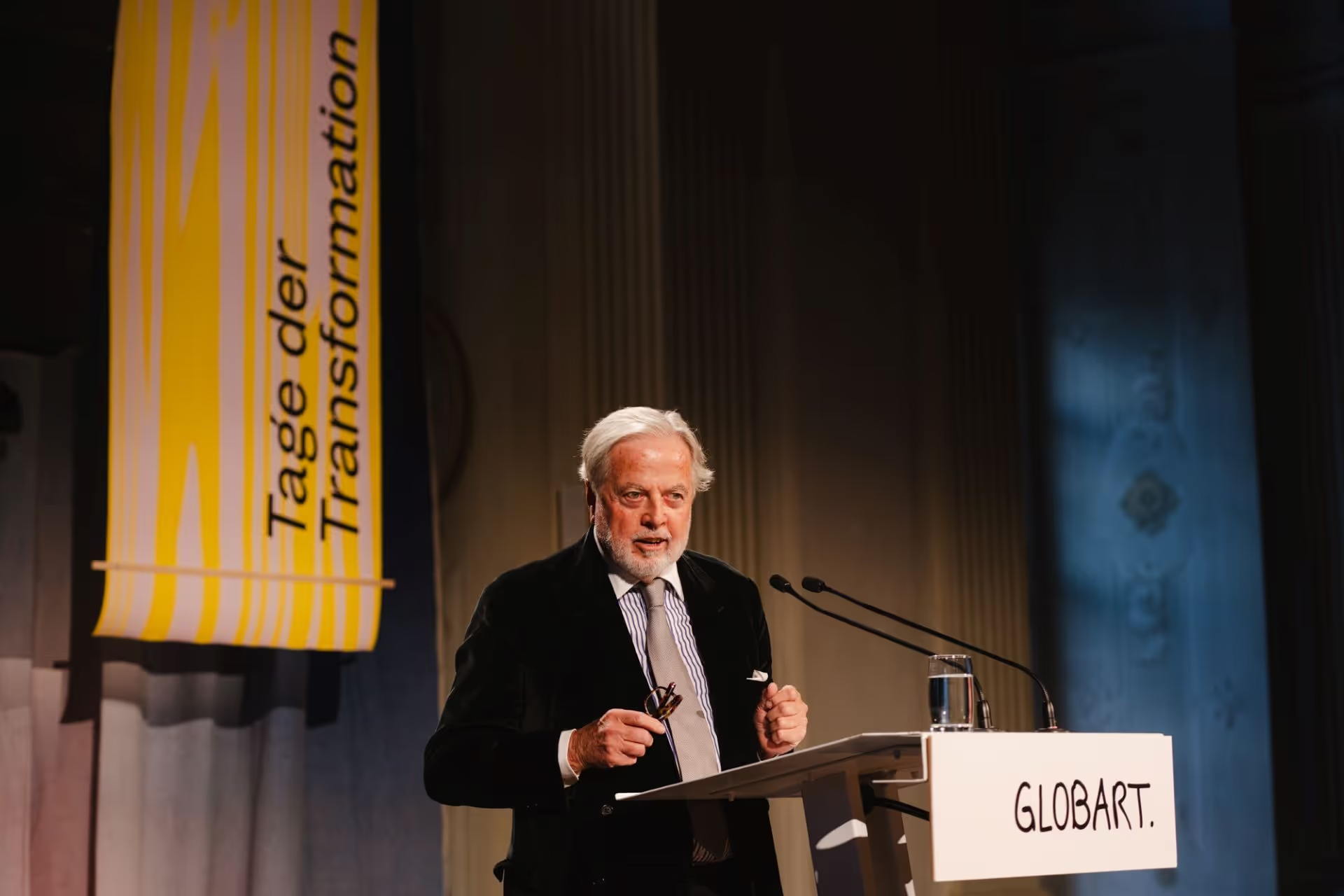
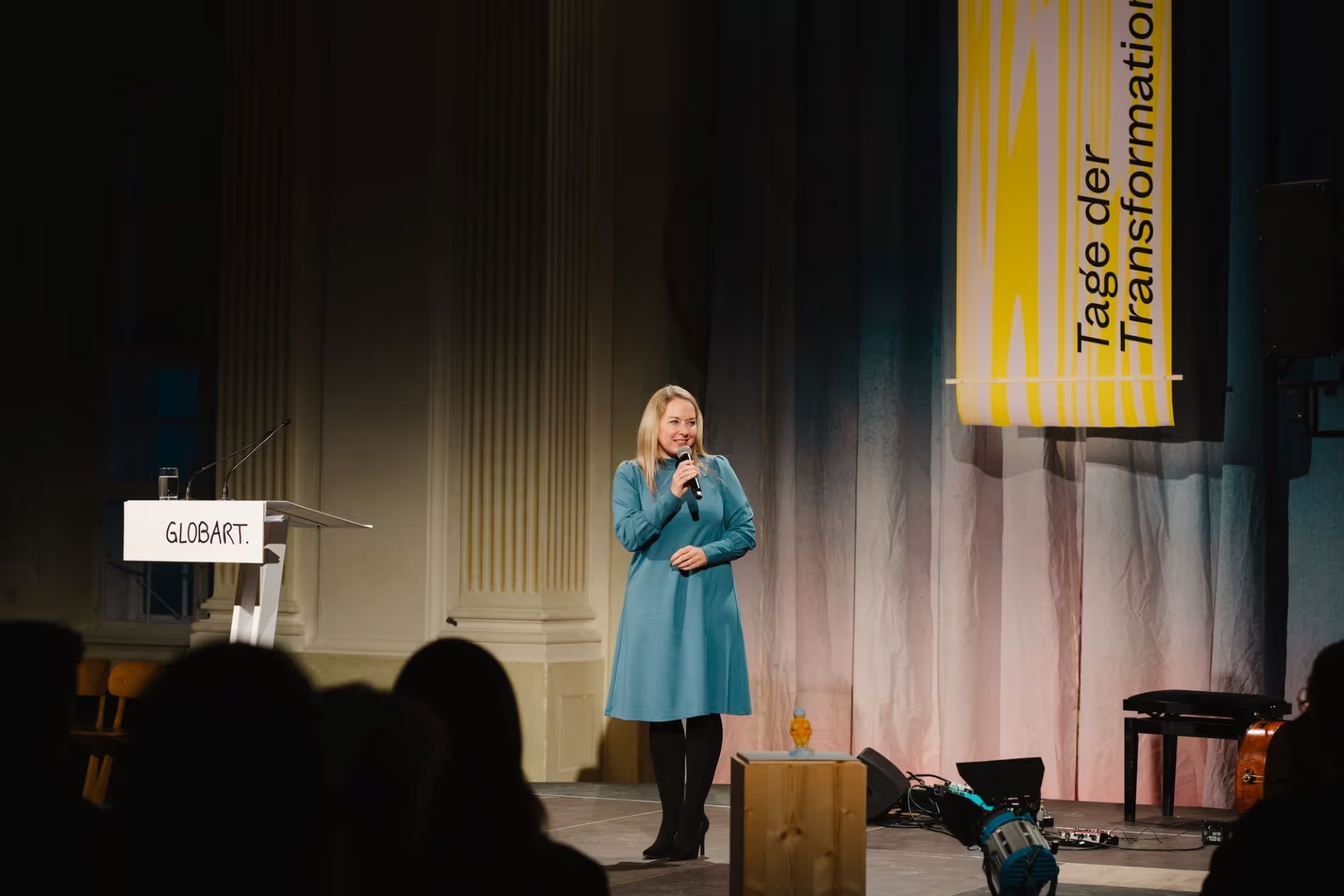
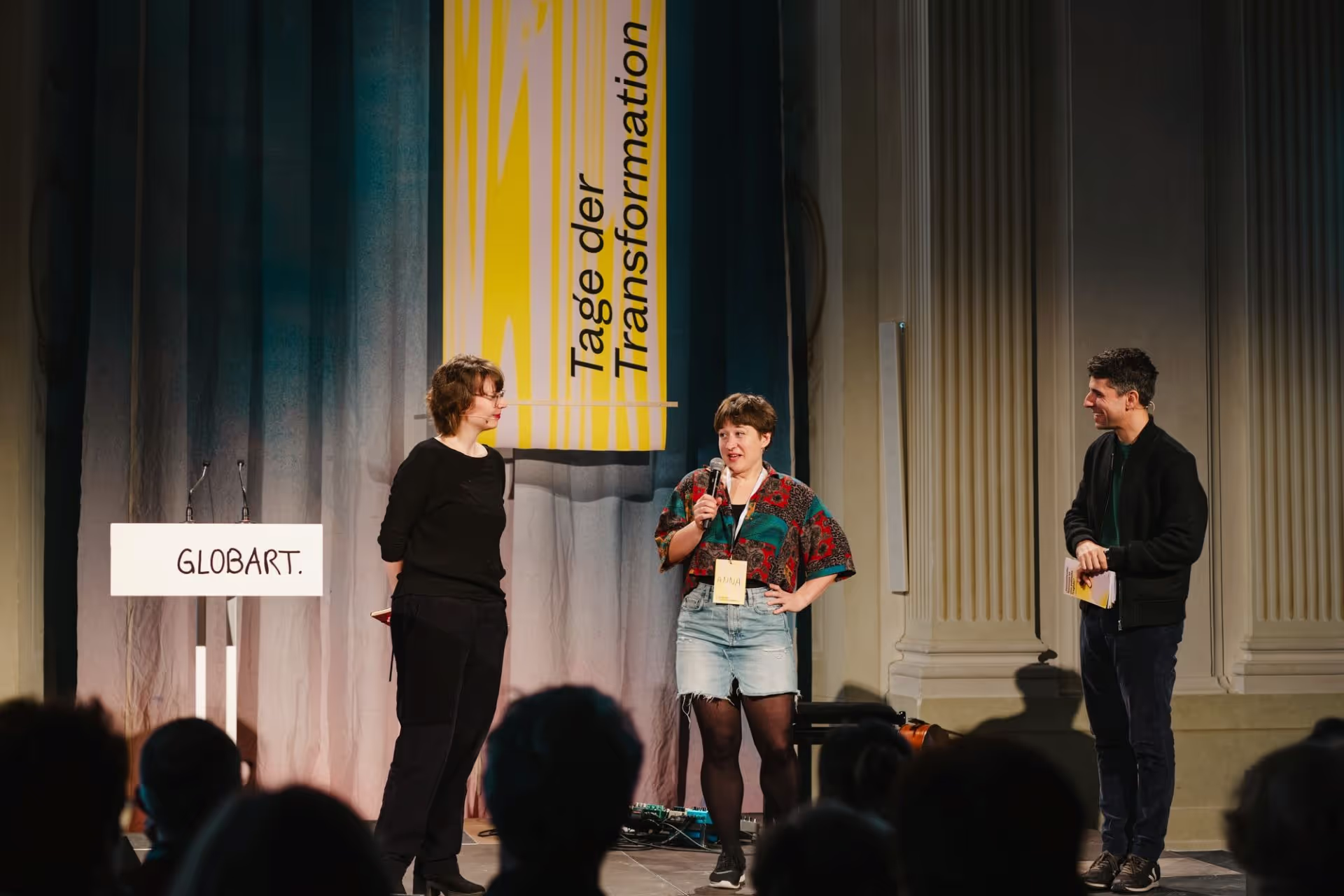
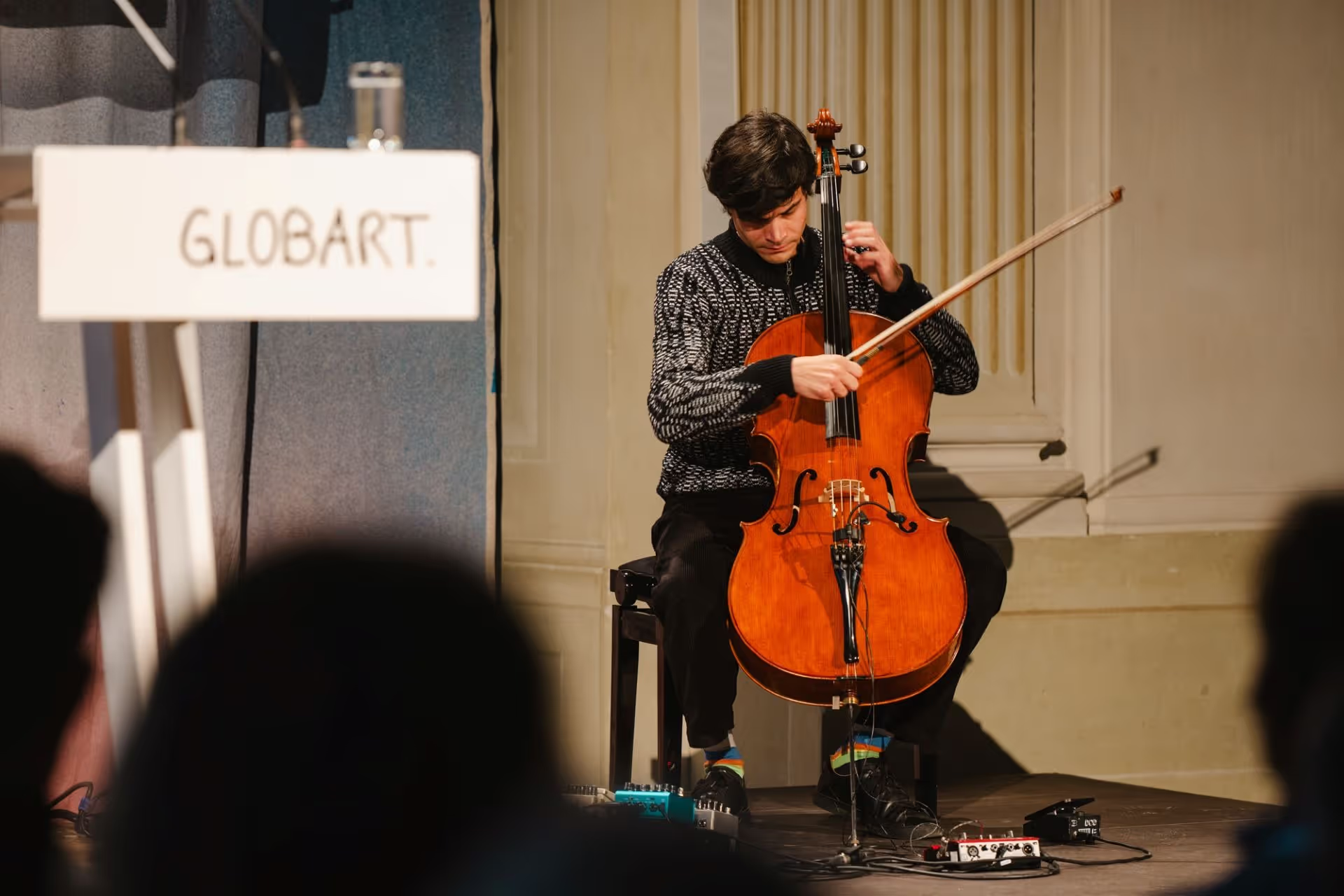
In the afternoon, to the sounds of cellist Lukas Lauermann, the audience embarked on a focused togetherness that also shaped the following days. After welcoming words from Jakob Brossmann, association president Hans Hoffer, Prior P. Jakob Deibl of Melk Abbey, Alexander Hauer of Tischlerei Melk and Lower Austrian state parliament member Silke Dammerer, the first of the Protagonists of Change opened the programme in the Kolomani Hall.
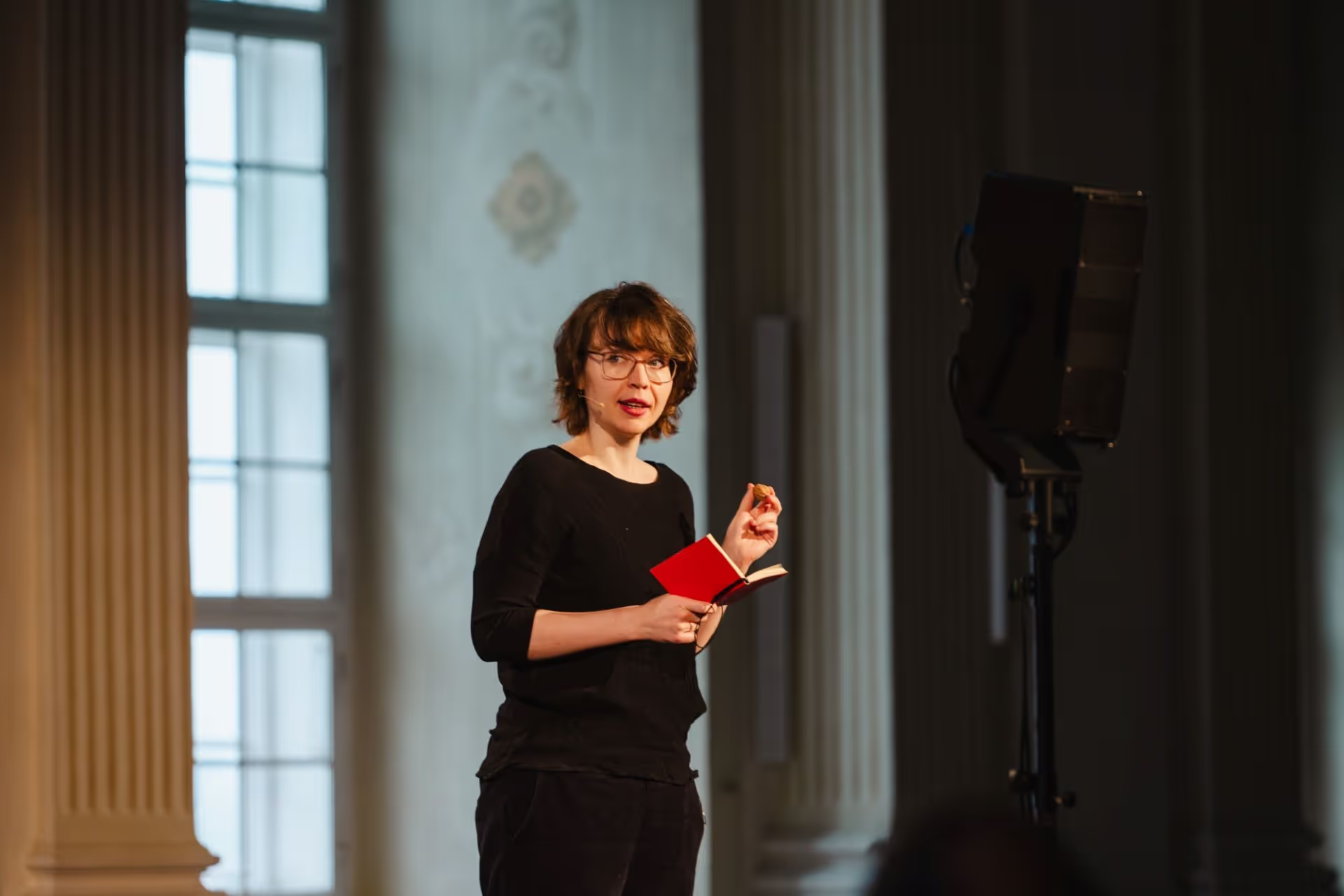
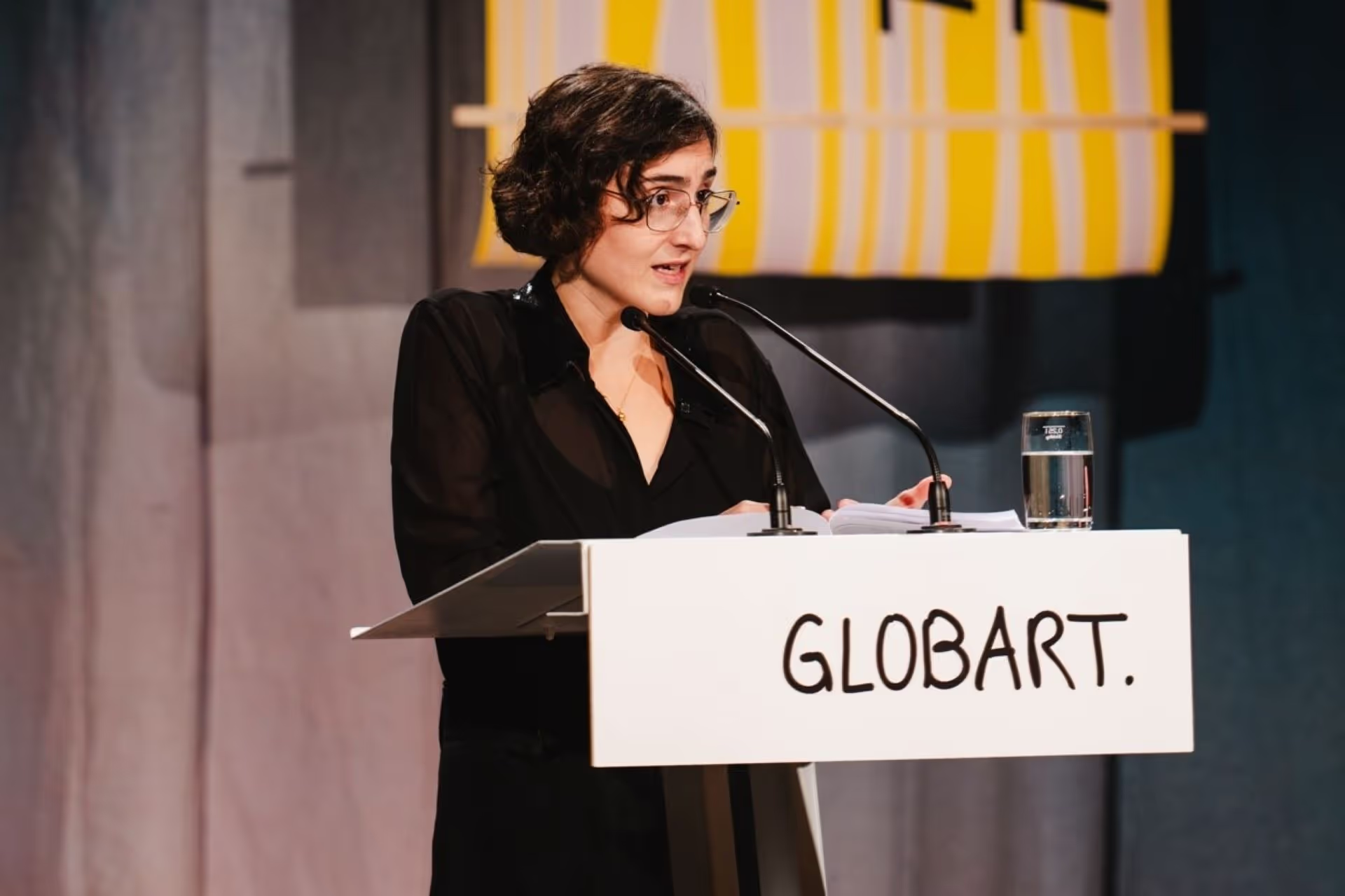
Author and filmmaker Iris Blauensteiner approached four people engaged in civil society in different ways through sensitive portraits. “I got to know Artis as someone with a great deal of imagination, curiosity and willpower, who has the stamina to dedicate himself to processes for the long term,” read her focused text on stage about the artist Artis Franz Jansky-Winkel. For decades, he has sought to document and keep alive the culture, language and way of life of the Yenish, a little-known (and not officially recognised) ethnic group that settled in Loosdorf.
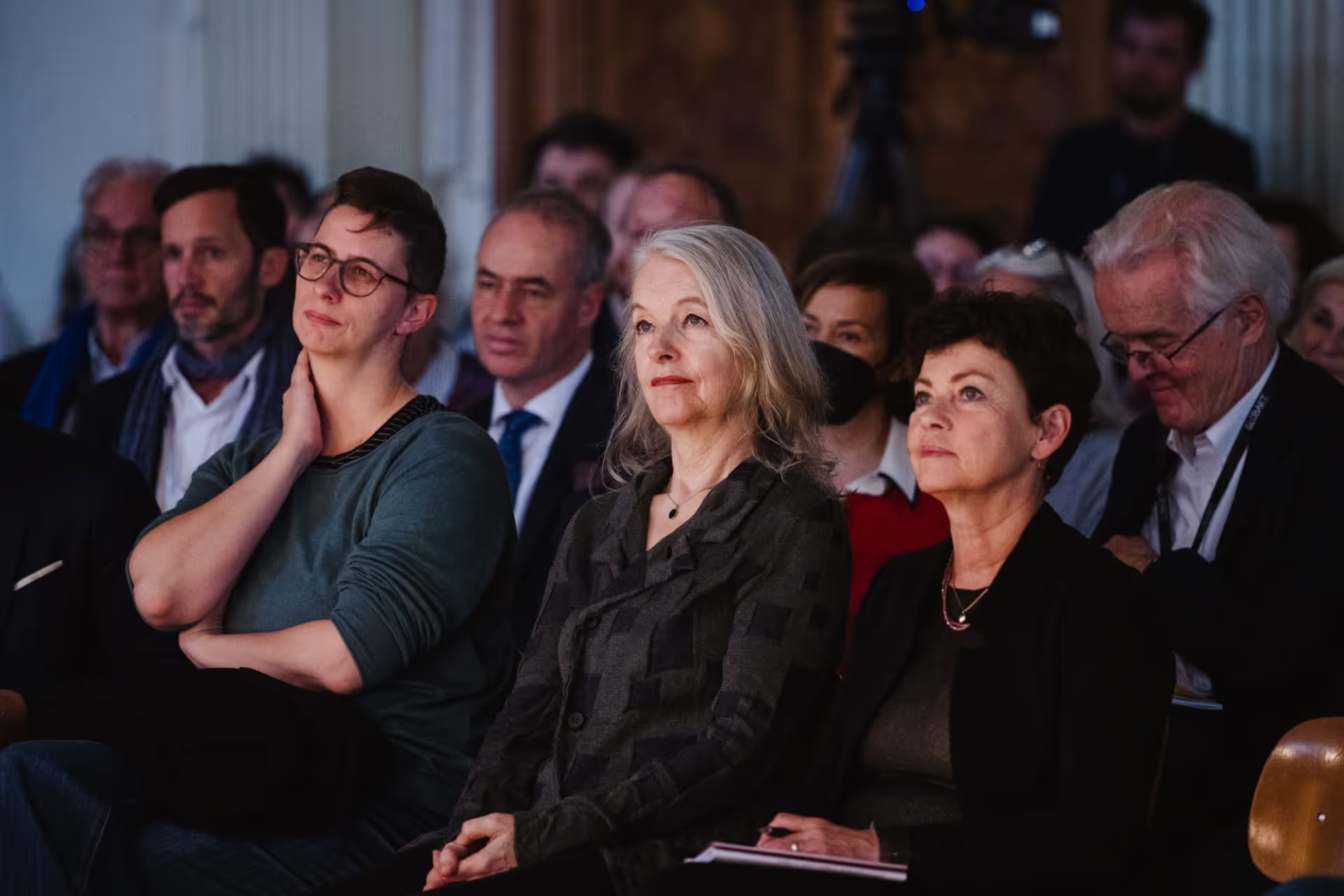
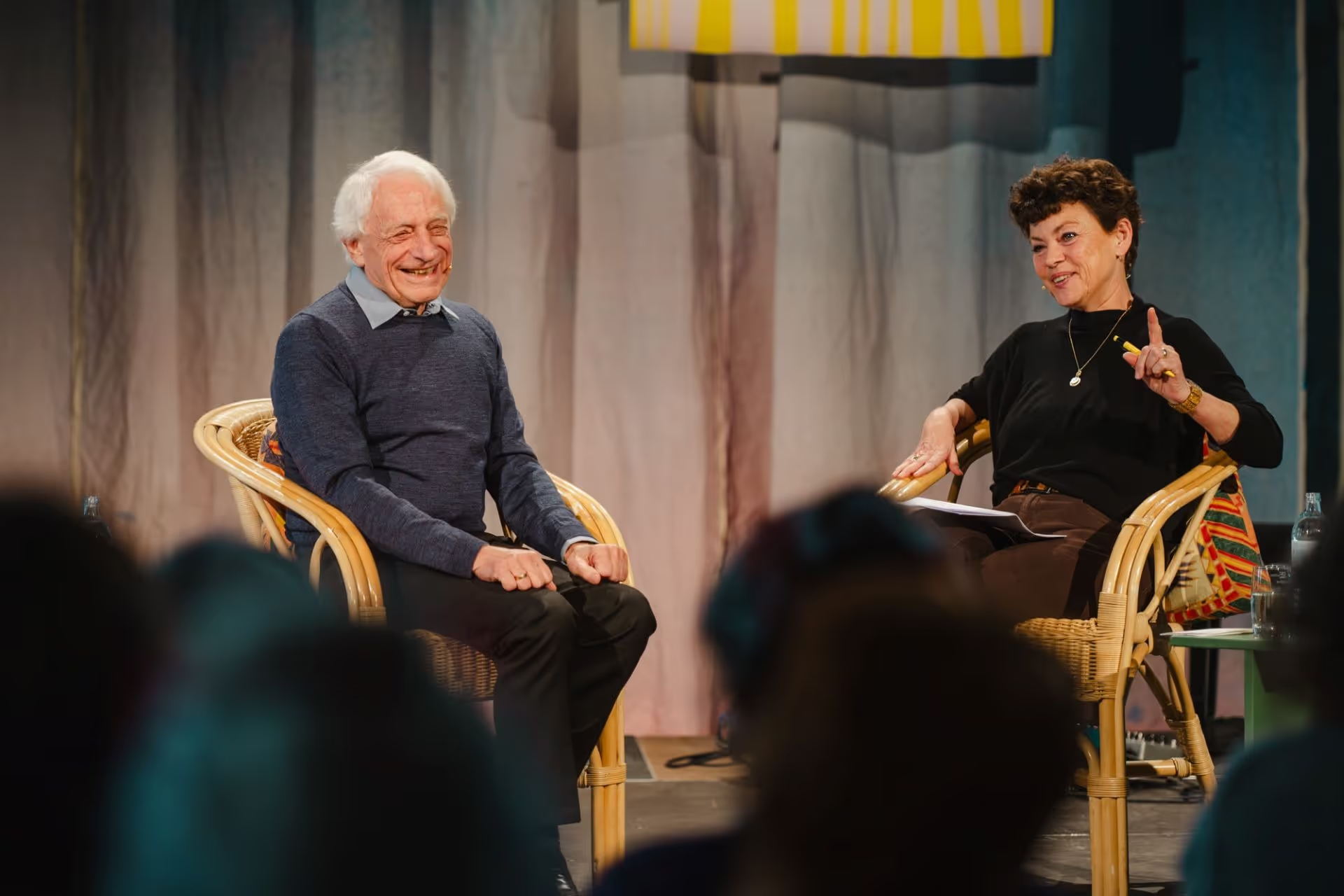
Writer Marlene Streeruwitz then gave the opening speech – and captivated with a powerful address. “We depend on being loved into the world by those who care for us in order to learn trust.” With this, she opened up a highly political space she calls the “cosmos of care”: “The subordination of the cosmos of care lets every person know that they are actually meant to lend their strength to the cosmos of the public. That, too, is part of the intended militarisation of the Enlightenment citizen.” Afterwards, Ö1 journalist Renata Schmidtkunz discussed with Marlene Streeruwitz what would currently be needed in politics to bring care back to the fore in the face of radicalisation, warmongering and the question of self-determined citizens. Speakers, visitors and the Globart team rounded off the evening with festive drinks and a shared dinner in the abbey's baroque cellar.
Saturday, 26 October
Practising standing up, seeking trust
“You don't always have to adapt and make sure everyone is happy. You can also say what bothers you, and you can do it in a language that many people relate to,” Iris Blauensteiner quotes the second Protagonist of Change, Maria Mayrhofer, on Saturday morning. Visitors listen attentively to the portrait of the managing director and co-founder of the campaigning platform #aufstehn, which gives engaged citizens a voice through grassroots initiatives. “Maria's fighting spirit, cast in clarity and determination, will continue to resonate in me,” says Iris Blauensteiner – to much nodding and agreement in the audience.
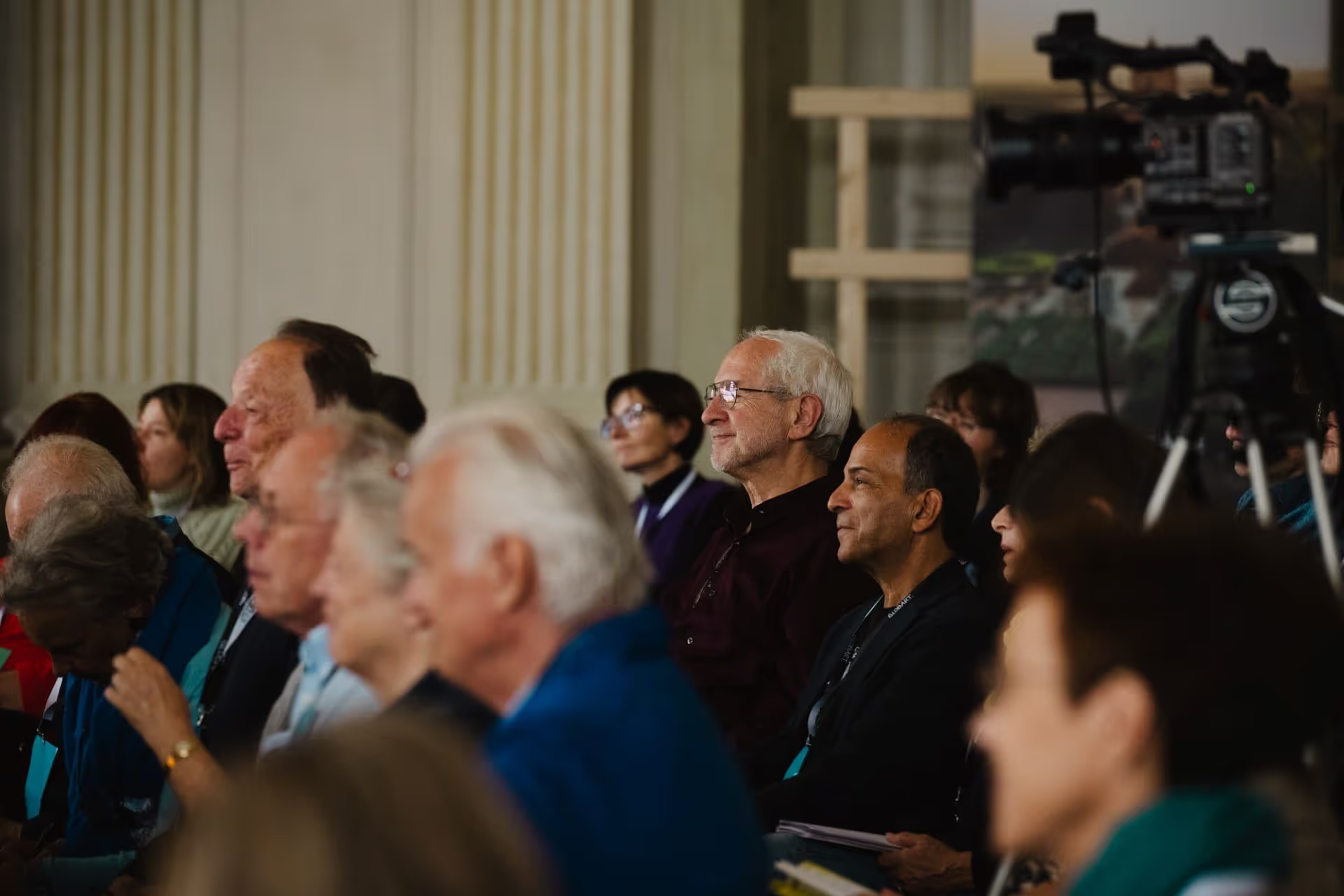
As the day's first speaker, philosopher Maria-Luisa Frick addressed the question “Can trust be a virtue?” in a rousing talk. She referred to “liberal democracy”, which according to Frick is a “web of relationships of trust and mistrust”. For her, mistrust is an important element of the Enlightenment and always also a “mistrust of our own reason”. “Virtue,” Frick said, “is not simply good, but a tool for action to take an appropriate position. Virtue asks: what kind of person do I want to be, to become, in order to live well with others?” At the same time, this constructive side of mistrust must not obscure the fact that there are currently actors trying to stir up mistrust through hate and personal attacks in the digital space, thereby destabilising democratic systems.
Safe harbour and unsafe AI tools
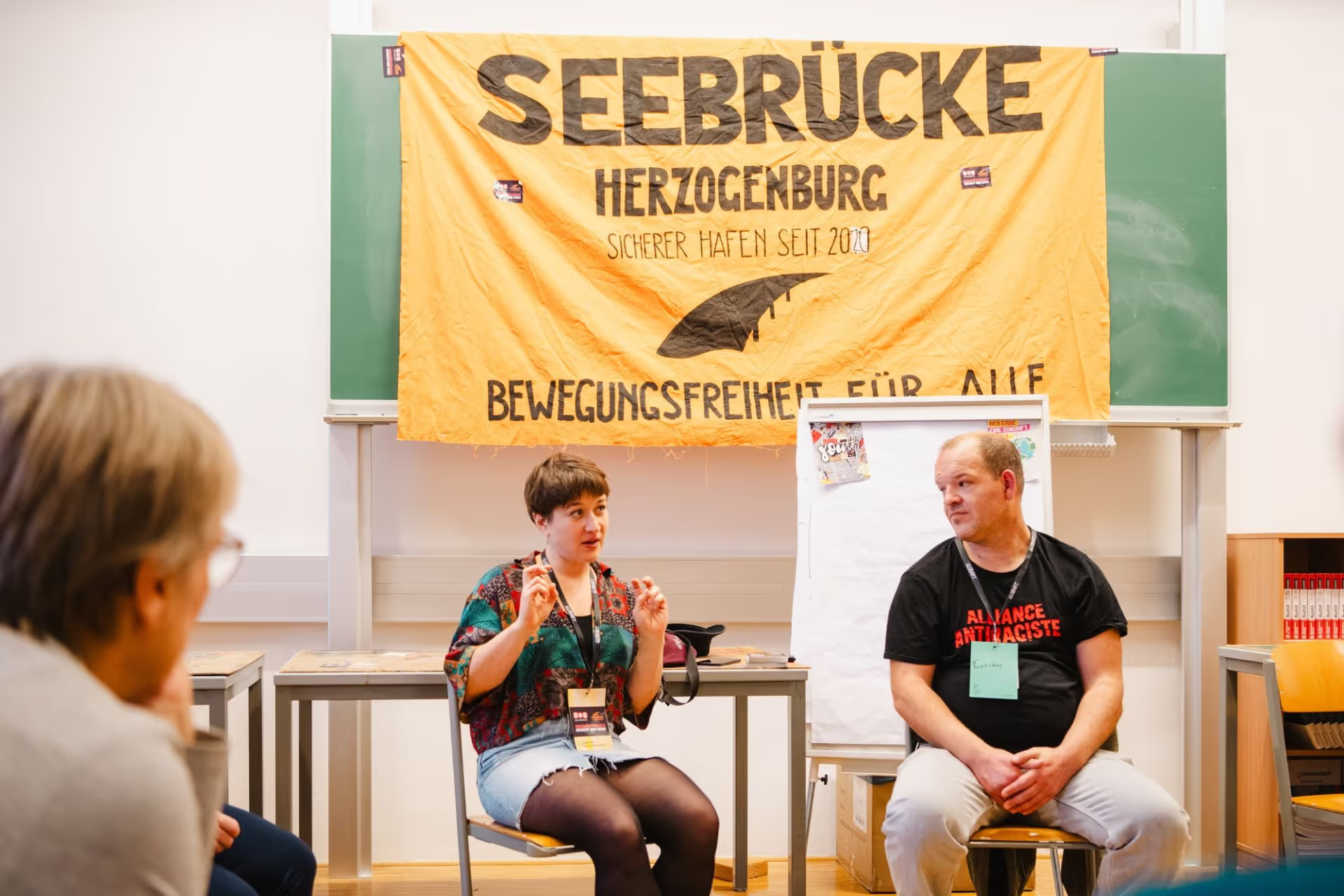
After a short break, the portrait “A safe harbour in the middle of the country” showed how committed activist Anna Distelberger is to the initiative Seebrücke Herzogenburg, which she founded with a few fellow campaigners. No wonder, because: “Anna likes groups where there is room for diversity and where you don't act within narrow limits – not even intellectually.” Everything Anna takes on, she does with a clear political stance – including organising relief supplies and finding accommodation. “For Anna, Europe is the ultimate expression of double standards and injustice, while at the same time justice is written on its banners,” says Iris Blauensteiner, and on stage Anna Distelberger radiates impressive warmth.
There was particularly focused silence during the talk by Christo Buschek, investigative journalist and Pulitzer Prize winner, whose lecture “Errors in the System” took a critical look at the rapid development of AI systems. Buschek asked how far our trust in these machines should go and what often devastating effects it can have when machines are used to evaluate people. “Algorithms implement any flaw without even being able to understand whether it is a flaw or not. Algorithms also fail to deal with chaos and inconsistencies. Ambiguity and rule-breaking, on the other hand, are human strengths.” In the field of self-learning systems – so-called artificial intelligences, which themselves rely on various algorithms and gigantic amounts of “training data” – machine decisions become a “black box” that humans can de facto no longer reconstruct. Buschek urged the audience to reflect on the impact of errors in this new era.
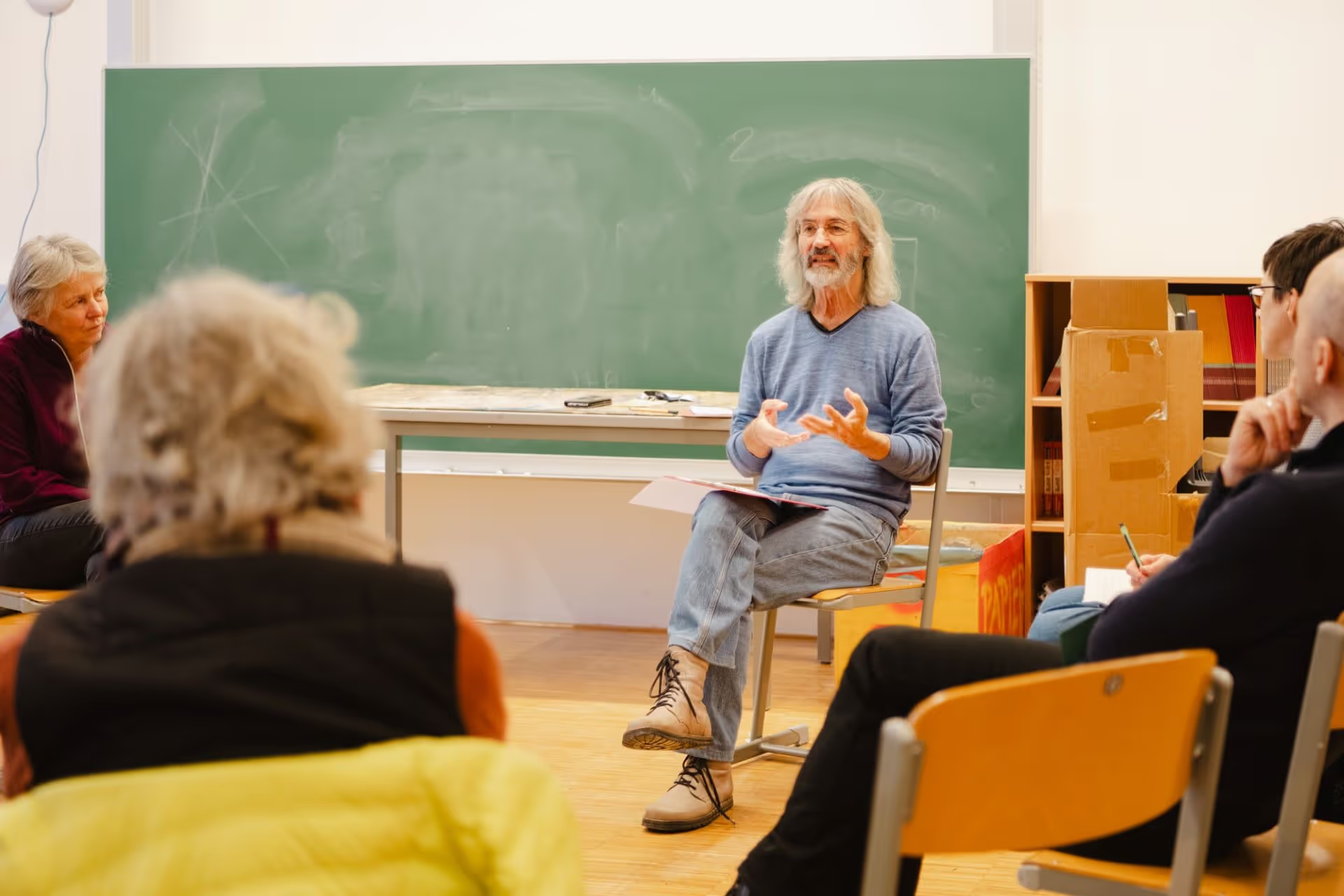
After lively exchanges over a shared lunch, the workshops began with the Protagonists of Change and partners in transformation Doris Bösmüller, Artis Franz Jansky-Winkel, Anna Distelberger and Maria Mayrhofer. The workshops offered an intensive space for reflection and deepened the themes of the morning programme.
Together against overwhelming power
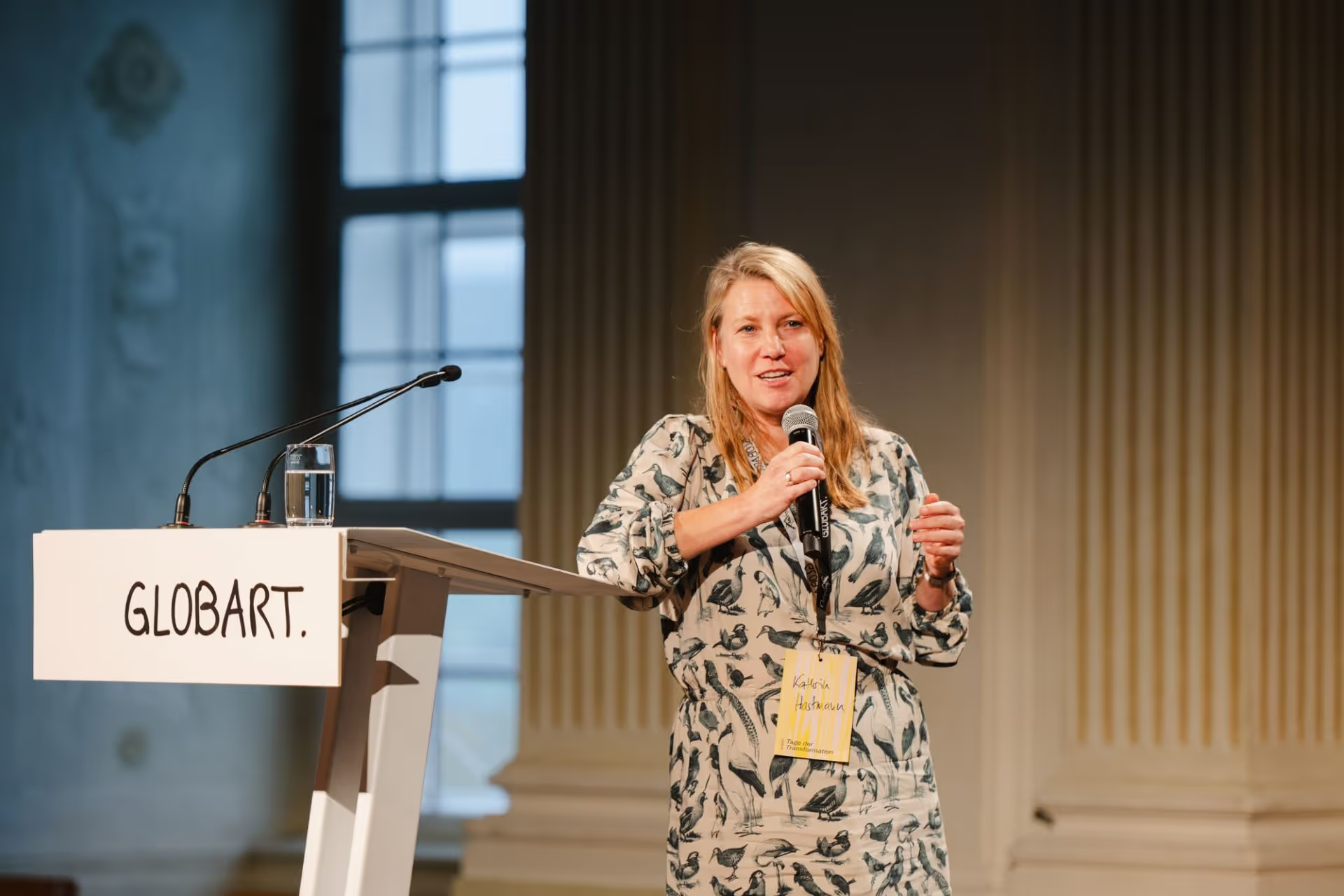
Journalist Kathrin Hartmann's talk took the audience into a so-called “sacrifice zone” – more precisely, the US Gulf Coast, where the oil and gas industry pumps its waste into the environment and the region has been sacrificed to its interests. But resistance is stirring. Hartmann was in Port Arthur with activist John Beard and reports: “Today everyone here knows someone who has cancer or has died of it. Often several members of the same family.” But the people there no longer resign themselves to their fate – instead, they do everything they can to no longer be seen as victims. They look for allies and trust that together it is possible not only to fight the huge conglomerates, but to win. Their commitment proves that global solidarity is a powerful means of defending oneself against seemingly overwhelming opponents.
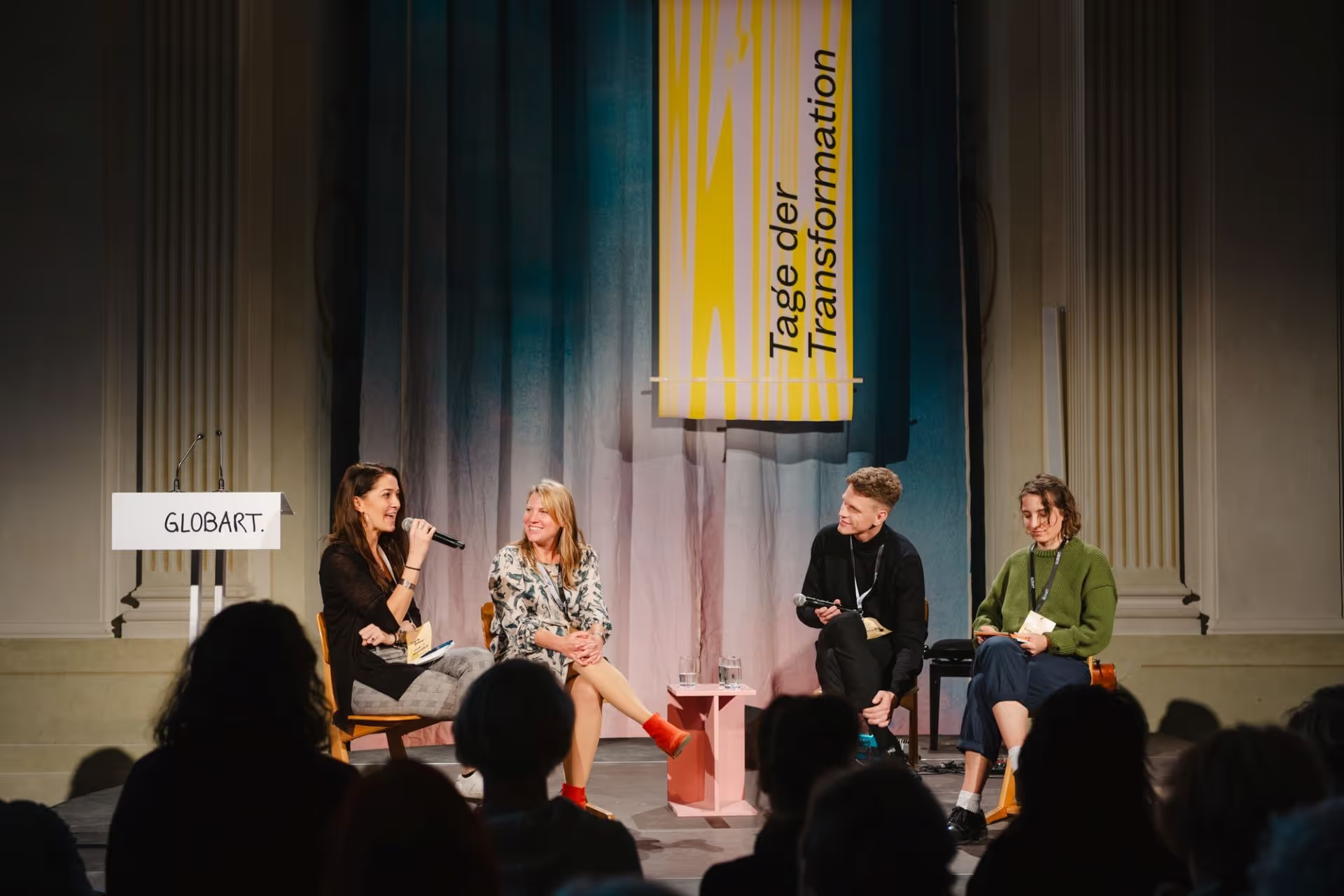
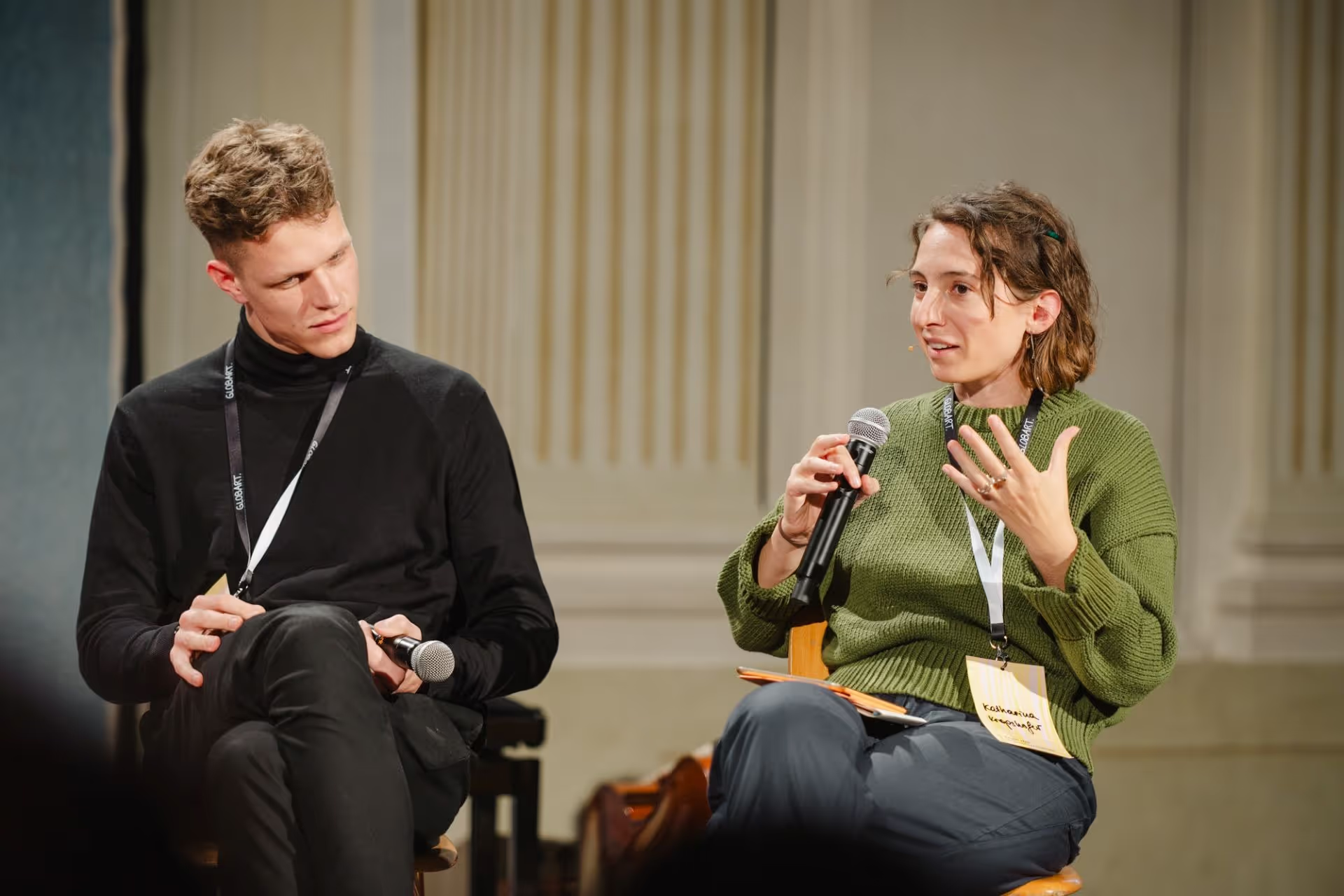
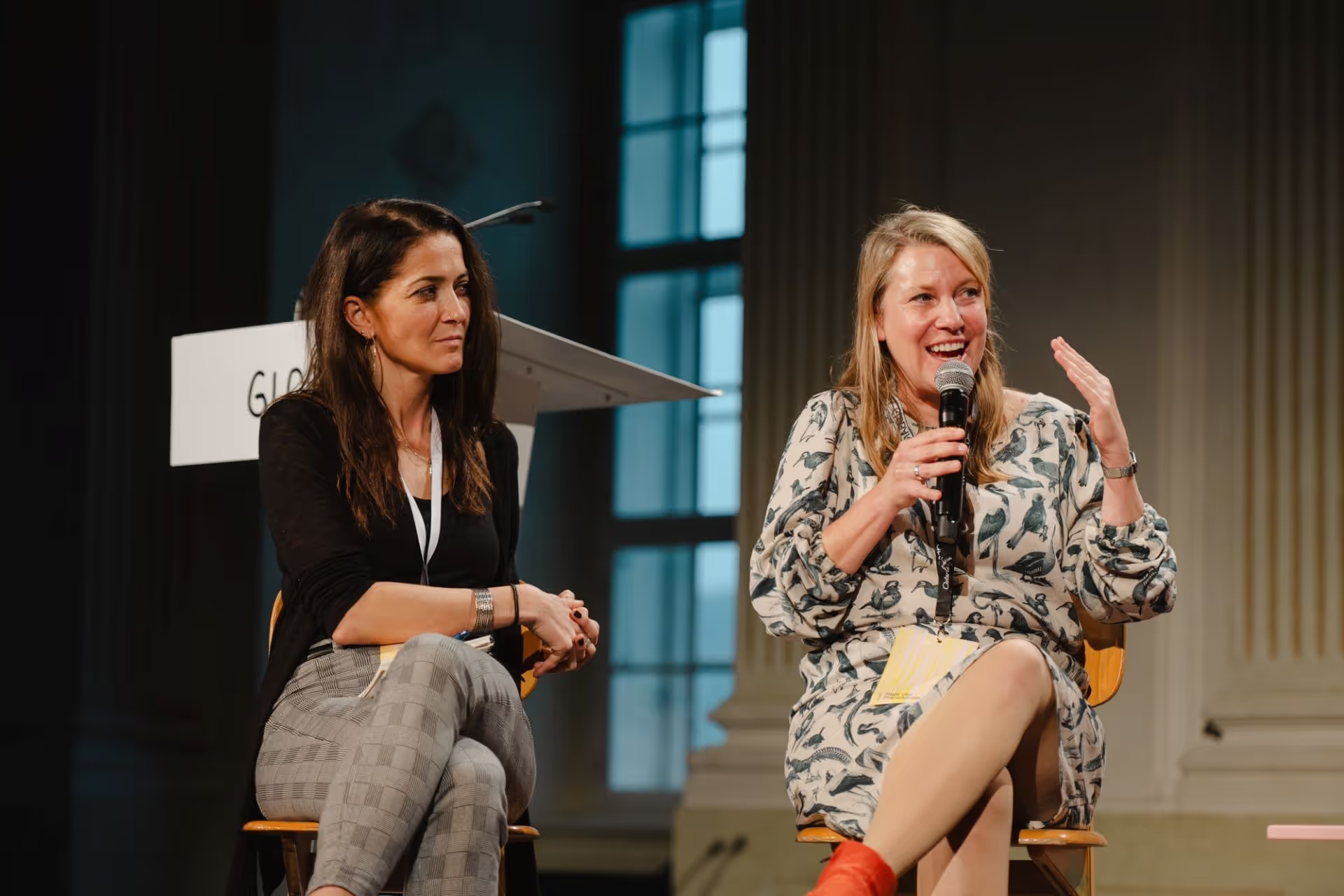
But what responsibility for ecological and social consequences does the individual consumer bear? Where must the law intervene, and who can monitor and enforce it? After her talk, Kathrin Hartmann joined a panel on these questions with start-up entrepreneur Alexander Doudkin (Ecotrek, Art of X) and Ursula Bittner, sustainable development expert at Greenpeace. Together they shed light on the pressing ethical and ecological challenges of global supply chains. The discussion, moderated by journalist Katharina Kropshofer (Falter), was a clear call to action and once again highlighted the complexity and challenges of a globally connected world that can only be tackled together.
The temptation of self-deception
“Thomas trusts those people and institutions whose work he has experienced as good for him in the long term. For him, trust is something you have to earn and work for,” Iris Blauensteiner said of Thomas Prager, founder of the media initiative Digitaler Kompass. This Protagonist of Change and his team take on fake news on social media and run workshops specifically for schools to improve students' media literacy and show them that not everything they read is true – and that it can be checked. “People don't want to be lied to or manipulated. They are interested in finding out the truth,” Prager is convinced.
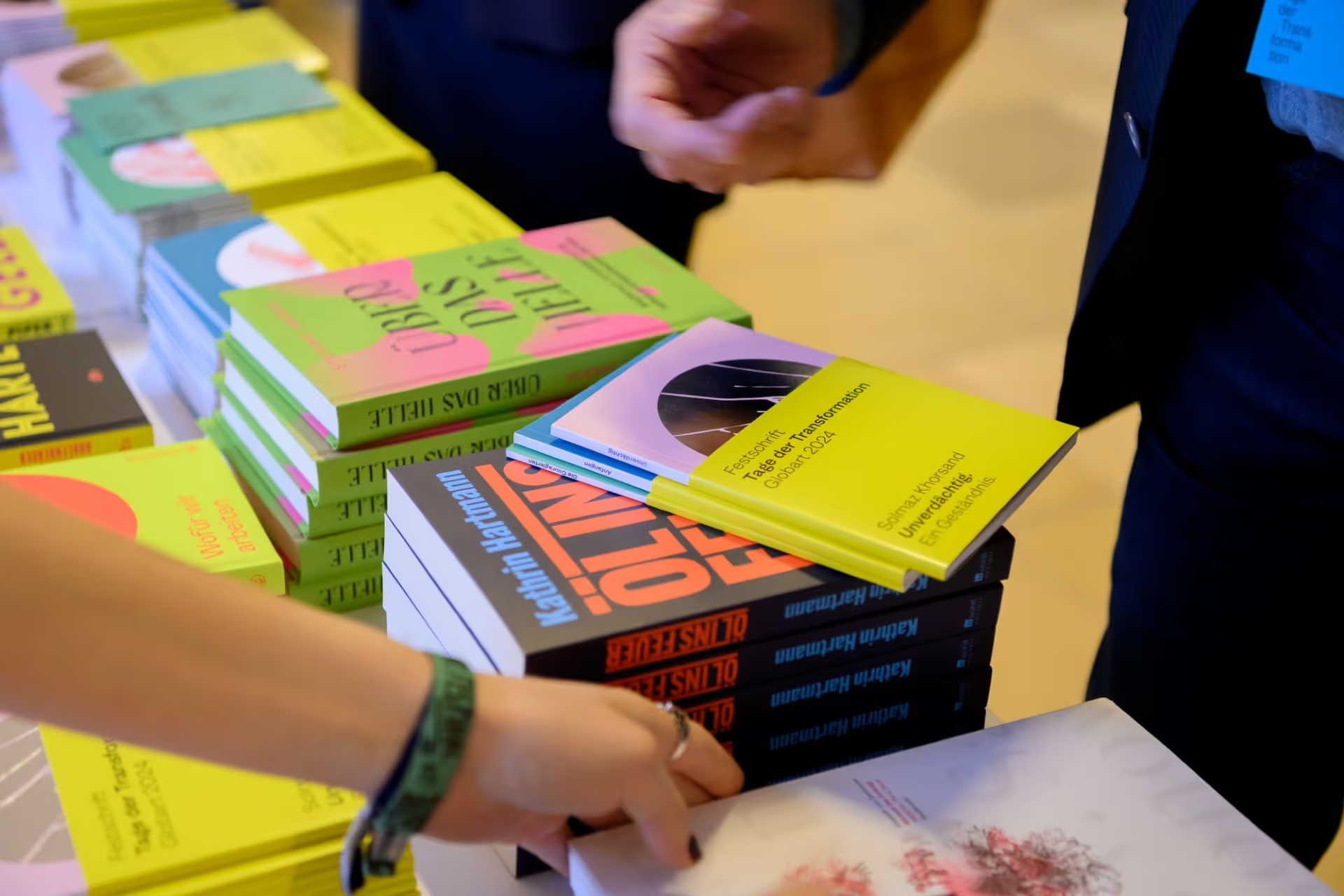
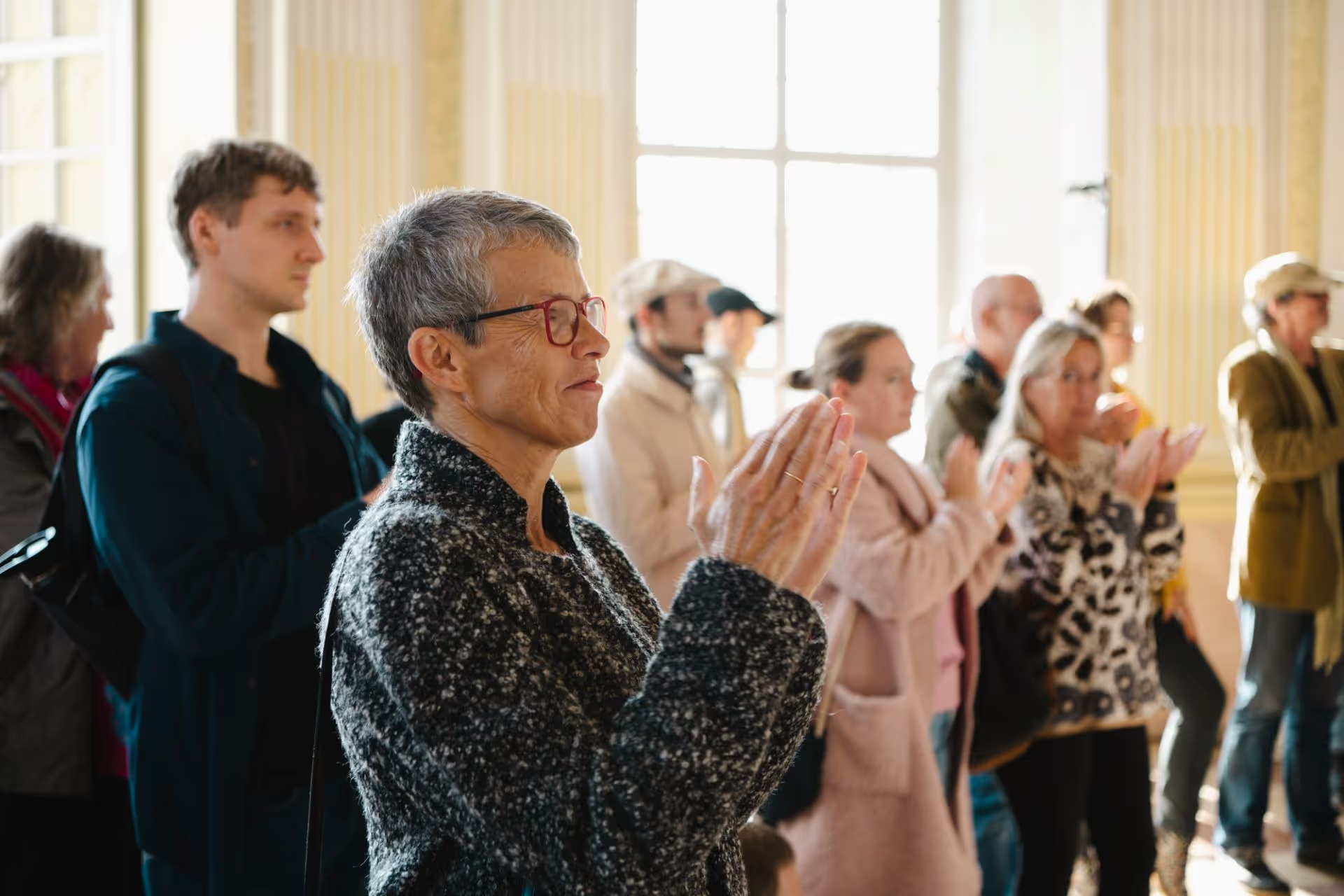
Journalist and author Solmaz Khorsand spoke of quite different untruths – even life lies – when she presented her Festschrift “Unverdächtig. Ein Geständnis.” (Unsuspicious. A Confession.). In her powerful text, she skilfully holds up a mirror to us – for which of us can claim never to have wanted to present ourselves in a better light than appropriate? Which of us likes to look closely at our own (family) history, which we prefer to repress? “Too rarely do we ask what it was like back then: what did grandfather, great-aunt, mother do and think? This reluctance may be fed by fear of what all these questions might reveal. But it may also be due to a certain indifference. What difference should it make now what happened when, and with whom?” In a bold arc, Solmaz Khorsand leads from society to individual responsibility and back again – the attentive audience thanked her with long applause.
“The greatest crimes are always preceded by violence in language,” said director Hans Hoffer, who staged the evening “Against Tyranny” in the Chapel of St John in the former episcopal seminary. Burgtheater actor Markus Meyer gave a powerful reading of texts of resistance and warning from three millennia, including works by Ovid, Paul Celan, Karl Kraus and Elfriede Jelinek. In this intense, multimedia evening with organist Franz Thürauer, sound artist GAMMON and a speaking choir, excerpts from Timothy Snyder's “On Tyranny” carried particular weight – a call to the audience to be and remain resilient: “Do not obey in advance! Be calm when the unthinkable arrives!”
Afterwards, audience and speakers reviewed the day at Tischlerei Melk with a jam session by Lukas Lauermann, Jakob Kammerer and Robert Unterköfler, conversations and a glass of wine.



No items found.
Programme
No items found.
Sunday, 27 October
Being in love, body and soul, completely
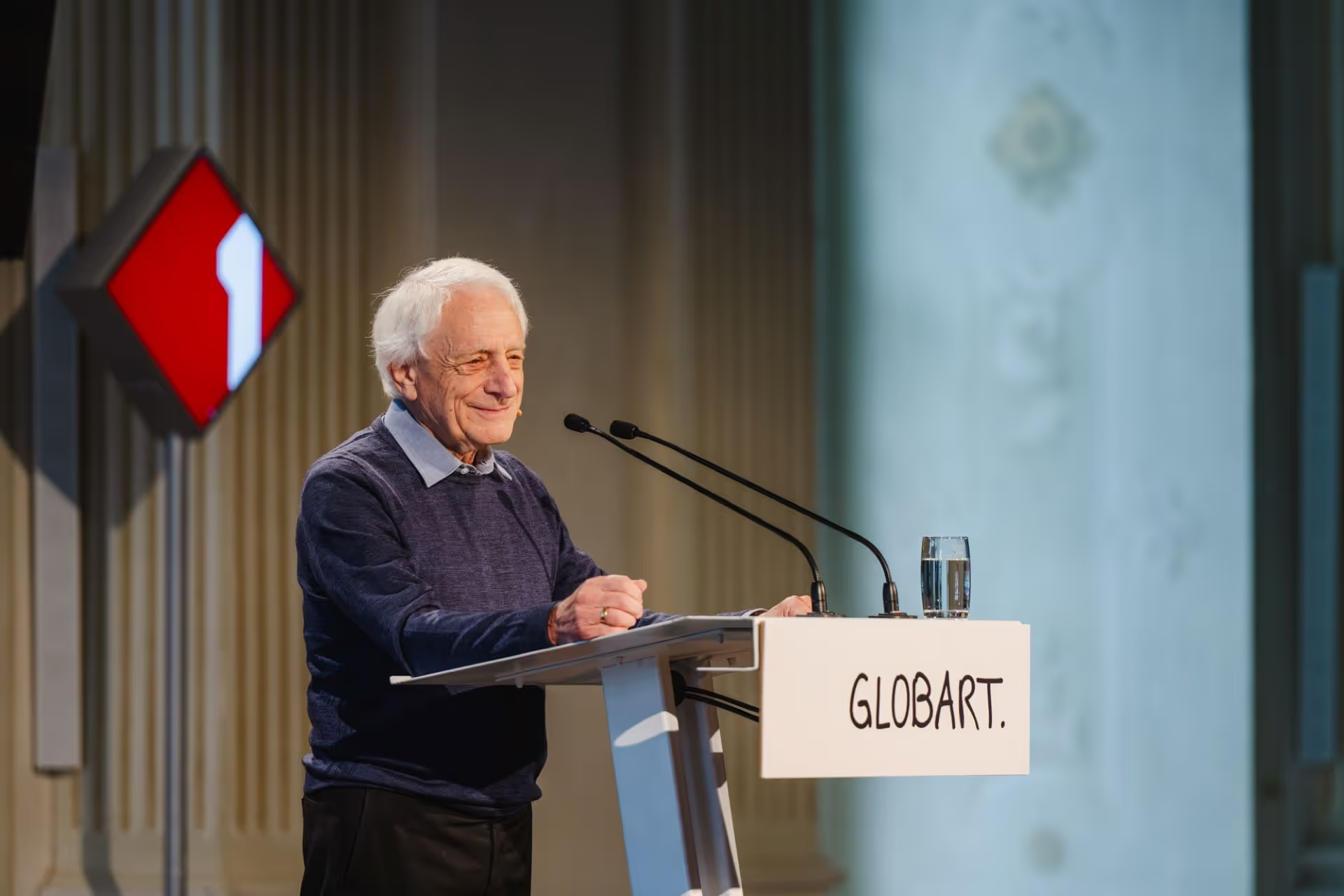
Sunday began with another highlight: the talk by Alfried Längle, one of the world's most renowned psychotherapists and a long-time companion of Viktor Frankl, the founder of existential analysis. With charm and wit, Längle captivated his listeners as he explored how trust develops, describing it very vividly as “building a bridge of planks across a river”, trusting in its durability and cautiously venturing onto it. His encouraging call to open up in the process of trust – “body and soul, completely” – was particularly memorable. Längle combined psychological insights with everyday examples, conveying a deep understanding of the complexity of trust in interpersonal relationships as well as in institutions.
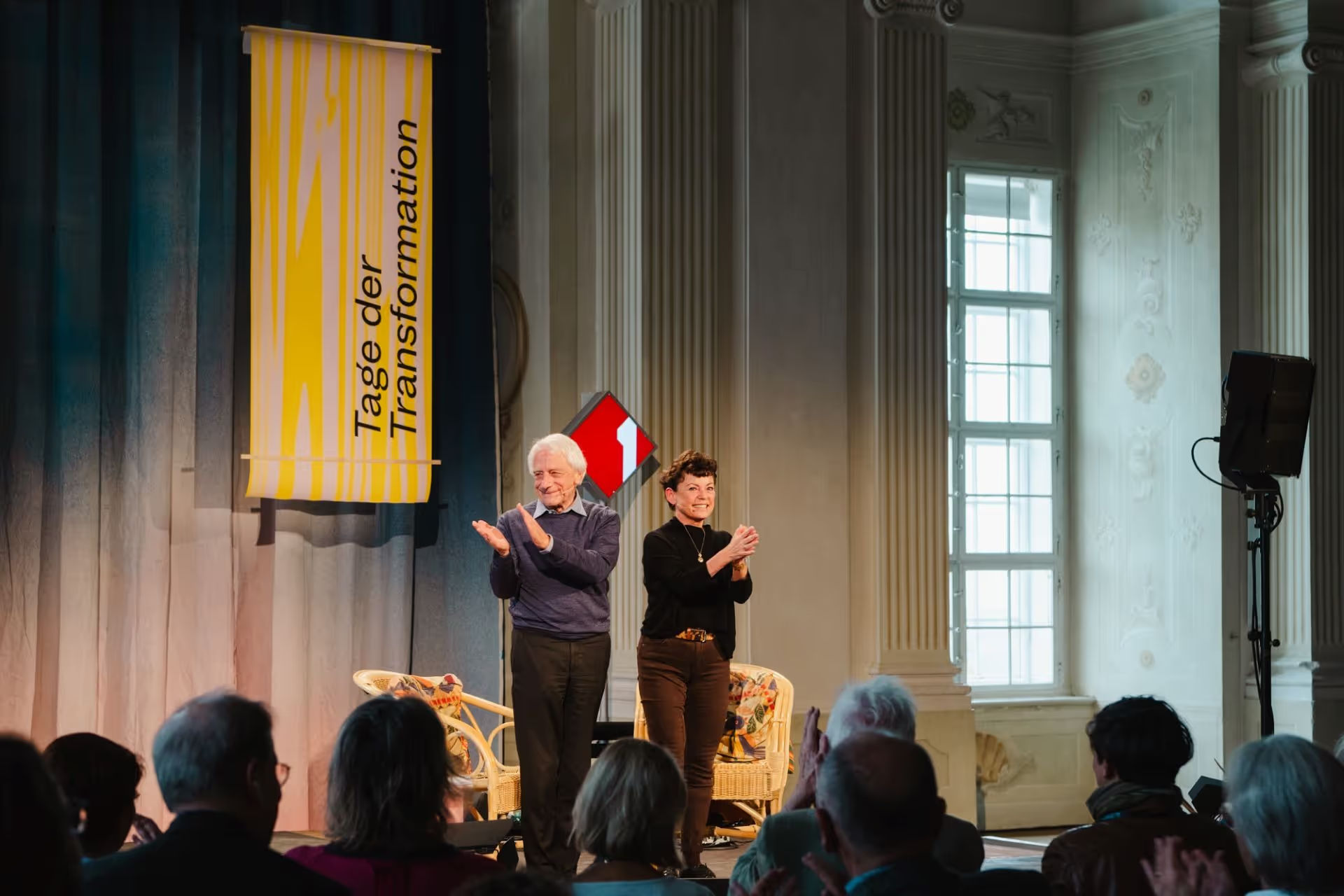
Following the talk, in a live-recorded conversation with Ö1 editor Renata Schmidtkunz that was as humorous as it was moving, Längle deepened the themes of his keynote and also shed light on his personal experiences with Viktor Frankl.
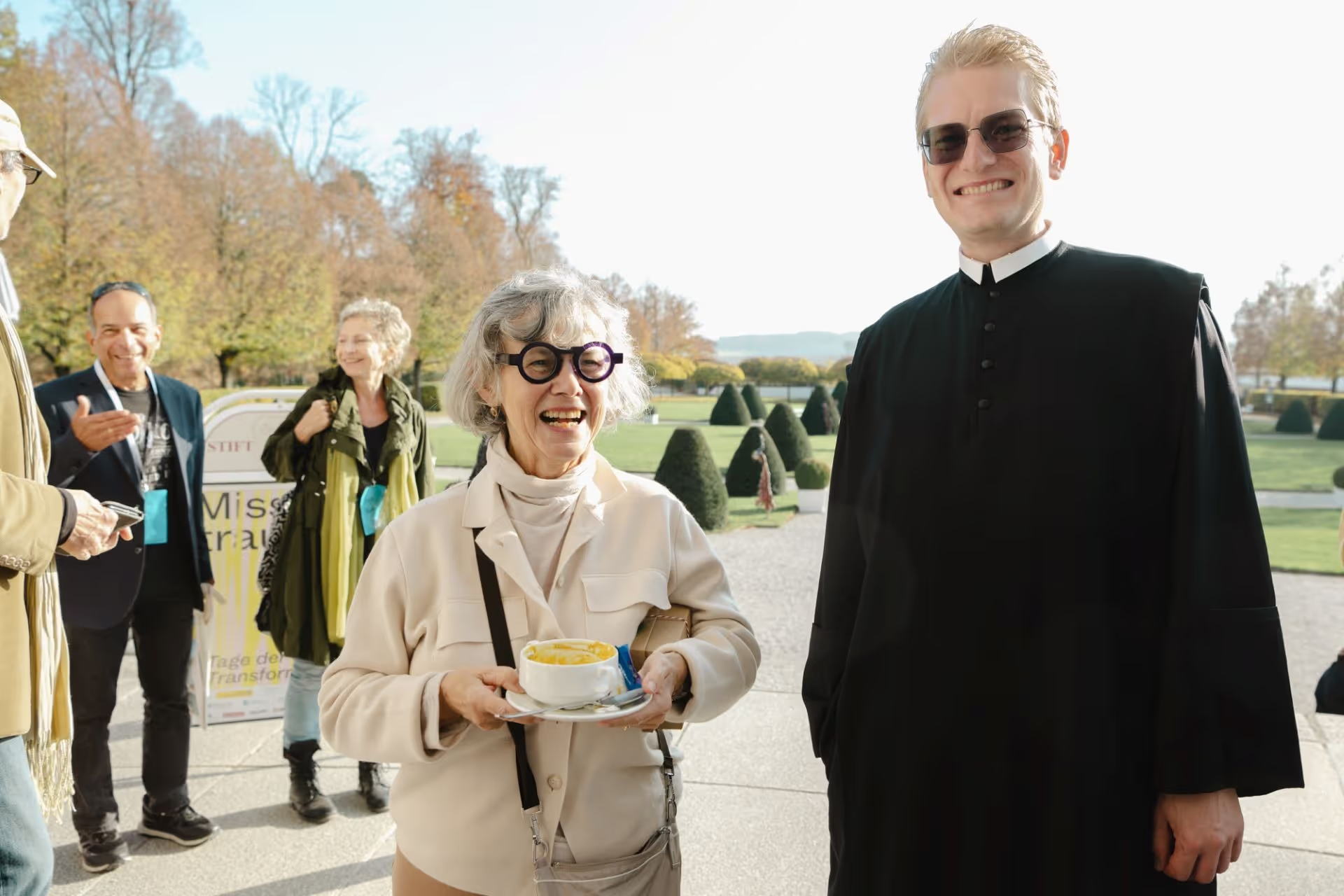
After a joint walk through the abbey gardens with Prior P. Jakob Deibl, Matthias Mittelberger of Weitblick and artist Judith Fegerl, visitors gathered in the pavilion of the abbey park. Waiting for them were not only refreshments but also the impressive sounds of Lukas Lauermann, who enchanted and moved the guests with his atmospherically dense compositions. The music, combined with Judith Fegerl's “Silent Machines”, provided the perfect setting to let the impressions of the weekend sink in and gather strength for the challenges ahead.
At the end, Artistic Director Jakob Brossmann once again thanked all speakers, visitors and the Globart team. “All of you have made the past three days a very special experience and a celebration of connection – and filled them with energy that lets us look to the future with confidence.” The guests were also delighted. “The Days of Transformation are a fixed point in our year and a place where solidarity, debate and the gentle revolution can be experienced. That is incredibly valuable,” said a couple who have come to Melk Abbey every autumn for years. We set out with the question of mistrust and found a great deal of trust – the trust that it is worthwhile to look at challenging topics together, connected, from many different perspectives.
Days of Transformation – listen, watch and read more:
- On Friday, 17 December at 9 pm, Ö1 broadcasts a conversation between Renata Schmidtkunz and Marlene Streeruwitz about the “unequal siblings” trust and mistrust, and to what extent the latter can be a tool of a living democracy. More information here.
- On Friday, 27 December at 4:05 pm, Ö1 broadcasts Renata Schmidtkunz's conversation with Alfried Längle on the question “Can I trust you?”, on building trust and Längle's experiences with Viktor Frankl. More information here
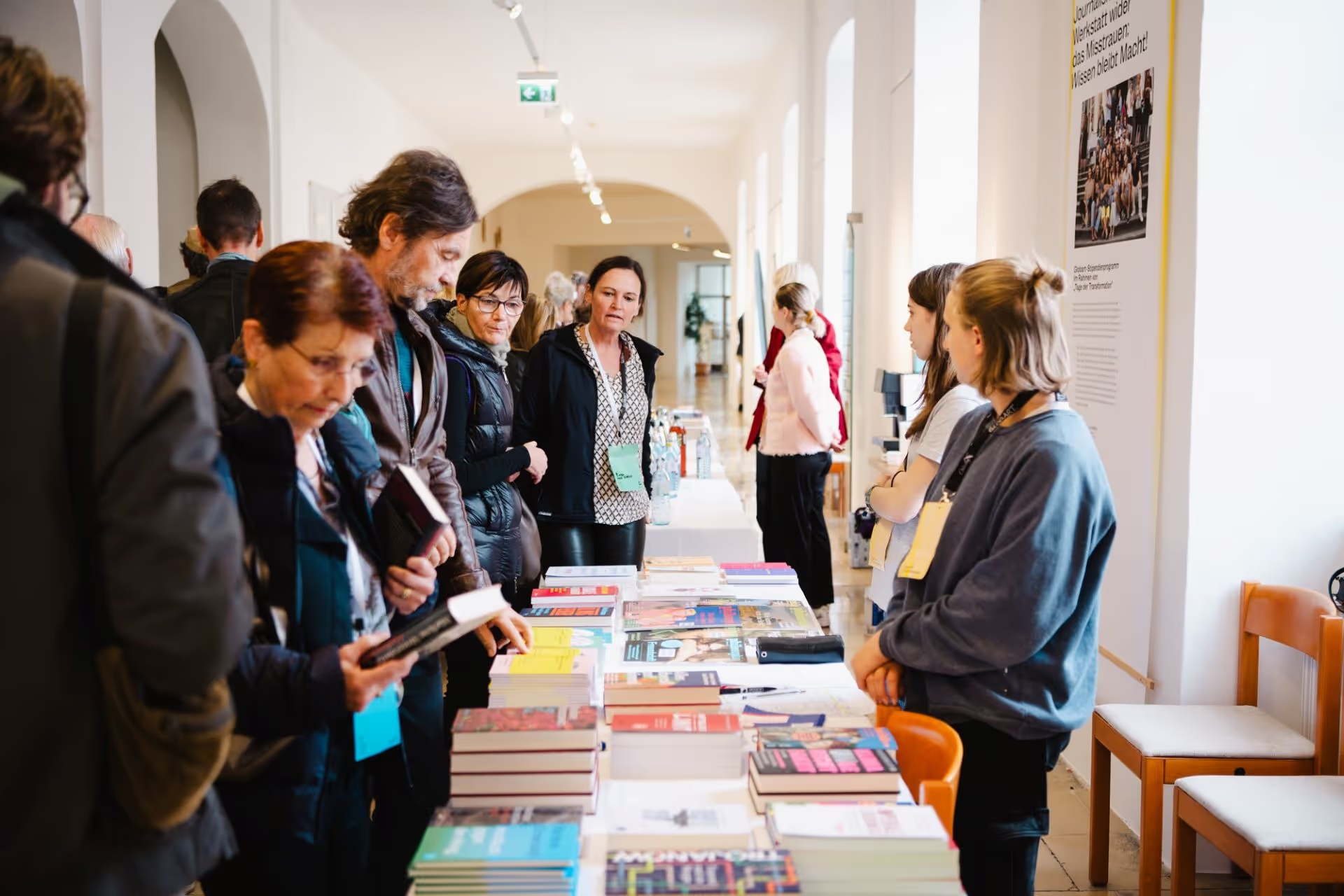
- The Festschrift “Unverdächtig. Ein Geständnis” by Solmaz Khorsand is available from the Globart office at info@globart.at for 9 euros
- Recordings of the talks are gradually being published on our YouTube channel.
Media coverage highlights:
- An excerpt from Marlene Streeruwitz's opening speech can be read in Der Standard ALBUM.
- Die Presse published a pre-print from the Festschrift “Unverdächtig. Ein Geständnis” by Solmaz Khorsand.
- Michael Huber reported in Kurier and Michaela Fleck in NÖN on Judith Fegerl's exhibition.
Photo credit: Luiza Puiu





No items found.


















Become a member now or give a membership as a gift
Globart members benefit from the Globart network and from reduced participation fees at all events.