Support us

NIGLS CROWD
.
.
to
.
.
Save to calendar
Button Text
NIGLS CROWD
Seen from today, the frescoes in the garden pavilion of Melk Abbey are exoticist images of longing for distant lands. Facing them is Nigl's Crowd. It stares, demands and observes – claims attention and throws the viewer, multiplied, back on themselves. The installation thus stirs the wide spectrum of xenophobic and xenophile nuances in our DNA. Nigl's Crowd, it seems, has always been there. Everywhere. You are warmly invited to the opening on Friday, 29 August 2025, 3 pm!
2:00
Franz Nigl: NIGLS CROWD
Exhibition in the pavilion of the Melk Abbey park
29 August – 31 October 2025, daily 9 am – 6 pm
Opening: Friday, 29 August 2025, 3 pm
Seen from today, the frescoes in the garden pavilion of Melk Abbey are exoticist images of longing for distant lands. Facing them is Nigl's Crowd. It stares, demands and observes – claims attention and throws the viewer, multiplied, back on themselves. The installation thus stirs the wide spectrum of xenophobic and xenophile nuances in our DNA. Nigl's Crowd, it seems, has always been there. Everywhere.
Formally, the clay figures are almost diametrically opposed to the frescoes. The walls are technically sophisticated, painted in soft, cheerful colours. They play with various illusionistic tricks – with light, transparency, spatial depth and trompe-l'œil. They suggest tangibility, yet are ultimately flat and distant. Nigl's Crowd, by contrast, is self-confidently simple: it forms a unit, it is heavy, and in its plasticity – especially as a group – it has no clear outline. But unlike the pure images of thought on the wall, the figures are reduced to the bare essentials.
Florian Reese, head of Atelier 10, which represents Franz Nigl, and curator of the exhibition: “Each figure seems to be an image of archetypal understatement: viewed individually, they are familiar but rigid and simple. As a crowd, however, they multiply anew each time, unpredictably – from shock to rapture.”
Fabian Burstein, Artistic Director of Globart and of the Days of Transformation: “Franz Nigl in the garden pavilion of Melk Abbey symbolises the contradictions that we not only endure at the festival but deliberately push and play out. We are also interested in the term Art Brut, which Franz Nigl embodies on the one hand through his biography and has long since left behind on the other, given the broader relevance of his work. Only one thing is clear to us: Nigl's Crowd will stir things up.”
Franz Nigl was born in Vienna in 1970. Early on, he turned to painting and was a singer and percussionist in various musical groups. Alongside his own music productions, in the 1990s he staged experimental, performative actions with an artist friend, choosing atmospherically charged settings such as flak towers, gasometers, abandoned industrial sites and a Nazi tunnel in Melk. In these environments he staged burning objects, which ultimately became motifs for photographic and film works. The result was dark, mystical photo collages and films carried by heavy sound montages.
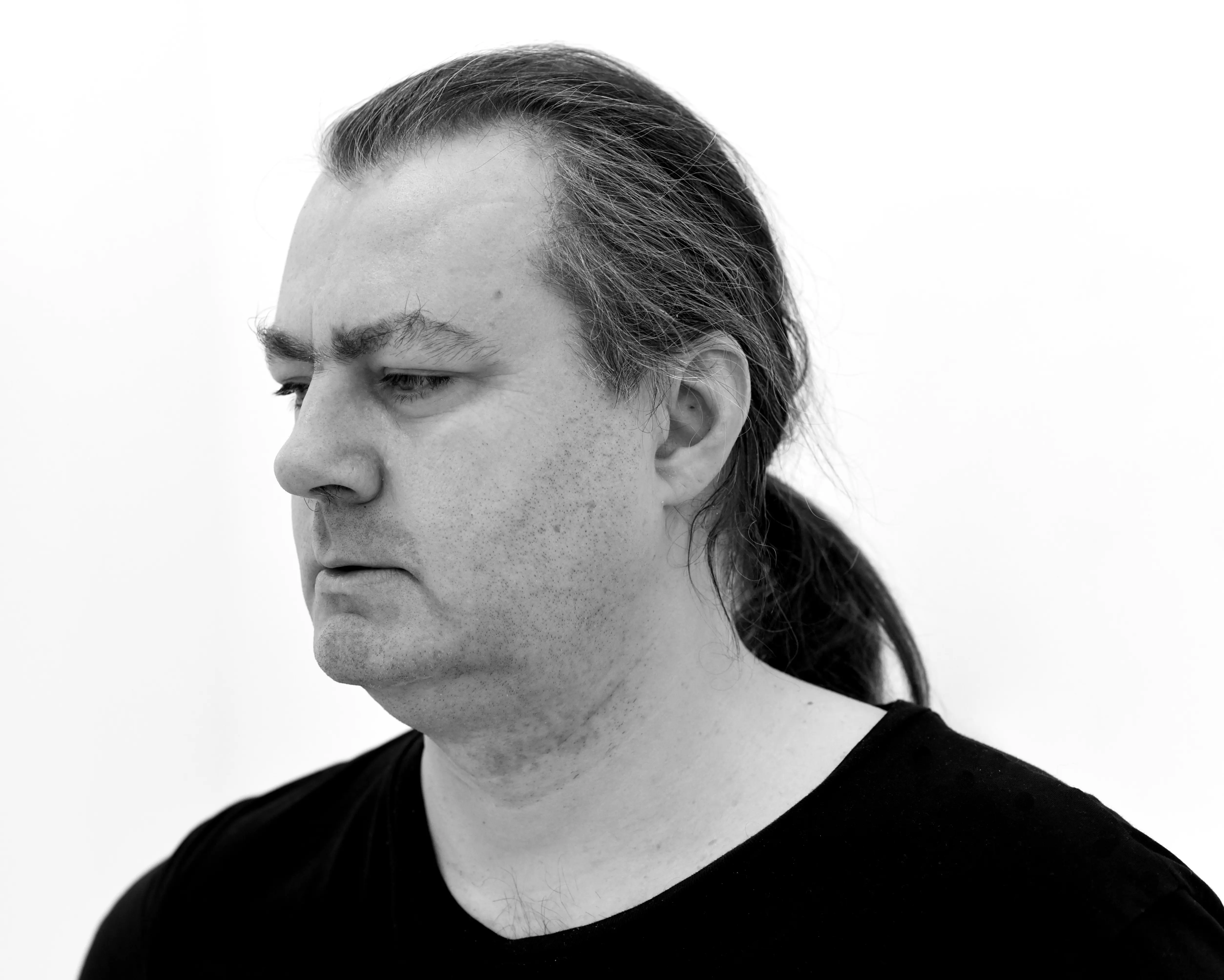
Franz Nigl's first clay figures were made as early as the late 1980s. But it was only in 2014, at Atelier 10, that he developed their dark appearance, switching from glazed clay to a heavily grogged terra nigra clay without decorative effects. As his steady production and the growing number of pieces began to take over his workspace, the problem of congestion and storage became a concept – and changed the perspective. Under the impression of this “state of siege”, Nigl shifted his focus from the individual figure to the strange, archaic, ghostly effect of an invasively spreading “crowd”: a population of figures of mysterious provenance and entirely unclear intentions.
Franz Nigl lives in Vienna and works at Atelier 10.
Programme
No items found.



In cooperation with:
No items found.
Sponsors
No items found.
Collaborations
No items found.
Sponsors of the scholarship programme
No items found.
Media partners
No items found.
Become a member now or give a membership as a gift
Globart members benefit from the Globart network and from reduced participation fees at all events.