Support us

The Utopian Space – Conversations with Ilija Trojanow
.
.
to
.
.
Save to calendar
Button Text
The Utopian Space – Conversations with Ilija Trojanow
Together with Barbara Prainsack, expert in health, science and technology policy, host Ilija Trojanow explored the utopian potential of our working world. What do we work for, and how? How is the value of work measured? Under which conditions could an unconditional basic income become reality?
14:59
A cooperation between Globart and the Transformation Office of Landestheater Niederösterreich
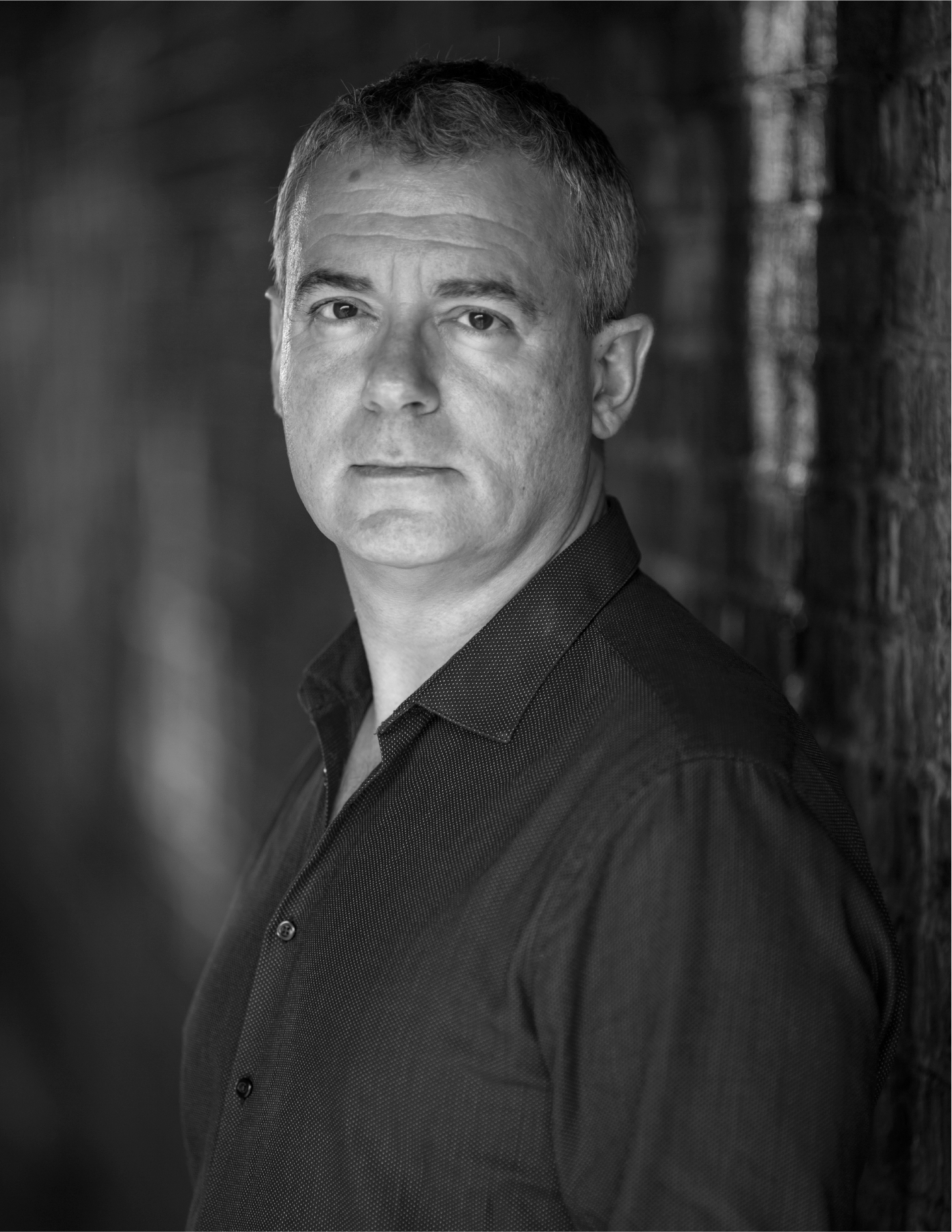
Guided by the conviction “that human progress is first sown in ideas before it blossoms into transformation”, Ilija Trojanow enters into conversation with “thinkers and activists, experts and gifted amateurs”.
Thinking freely about the future and the seemingly impossible, and looking at our present from the perspective of what is desirable – that is the power of utopia. It liberates our thinking and gives us clarity about the steps needed for change.
With this experimental conversation series, Globart is breaking new ground. We bring not only art into discourse, but also discursive content into places of art. From the 22/23 season onwards, the series takes place three times a year at Landestheater Niederösterreich. Inspiring and provocative voices from science, art, activism and business are invited to tell their stories and enter into dialogue to imagine a desirable future. They are personalities who drive an eco-social transformation by revealing spaces for action.
The theatre as a space of transformation – where roles are taken on, performed and interpreted and stories are staged – is the perfect venue for this: a space of possibility in which storytelling and imagination cast their spell. Where better for sparks to fly?
In passionate utopian Ilija Trojanow, Globart has won a prominent writer and citizen of the world as host – someone who shakes people up with his books and develops sustainable ideas in many conversations. In the series “The Utopian Space”, he invites three very different personalities onto the stage.
Looking back:

26 November 2024 – 7:30 pm
Ilija Trojanow in conversation with Barbara Prainsack – on how we want to work
How do we want to work in the future, and how will we? What is a human being still worth in times of profound upheaval? Is the wish for more solidarity, for fair and meaningful work for all, mere fantasy? And how much utopian potential does an unconditional basic income hold?
How do we want to work in the future, and how will we? The traditional models no longer seem to function. While some can barely live on their wages, many sectors suffer from a shortage of workers and skilled staff. Work is also a question of solidarity: the applause for “essential workers” was short-lived; care work – done above all by women – keeps the system running, yet is neither adequately paid nor socially recognised. Generation Z strives for work-life balance, while some employers push for longer working hours.
Is the wish for fair and meaningful work for all pure fantasy? How is a person's value measured in times of digitalisation and profound upheaval? Is the idea of an unconditional basic income utopian?
The audience is invited to join the discussion. After the talk, we invite you to wine, bread and conversation in the foyer.
Tickets are available from Landestheater Niederösterreich.
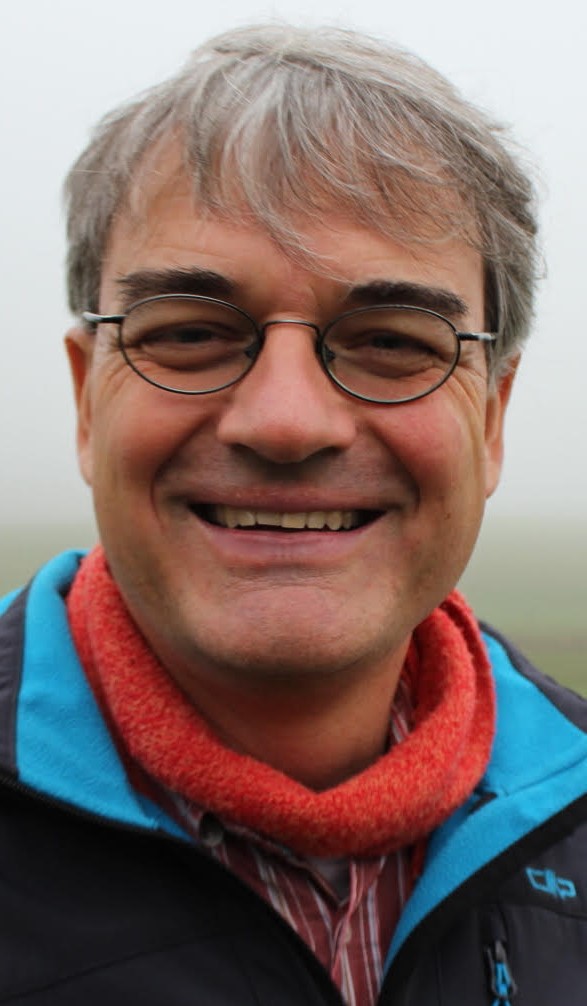
Photo © private
18 October 2024 – 7:30 pm
Ilija Trojanow in conversation with Ulrich Brand – on capitalism
What is a good life for all – socially, economically and globally? “This cannot succeed without (…) fundamentally questioning our way of life, in search of an existence beyond profit,” writes Ulrich Brand in an article for Der Standard.
On the trail of a good life for all, Ulrich Brand and Markus Wissen subject our present to a critical diagnosis in their books. He traces how capitalism is reaching its limits, pressured by social and ecological crises, but also by those who no longer want to go along with the exploitation of people and nature. Many struggles will decide the future of humanity, and the outcome is anything but certain. Will the status quo be defended – and with it, will authoritarian tendencies grow?
Ulrich Brand is Professor of International Politics at the University of Vienna; his book “The Imperial Mode of Living” (with Markus Wissen) made the SPIEGEL bestseller list. With Ilija Trojanow, he discusses what “imperial” means today, whether a “green capitalism” worthy of the name can develop in Europe, and what consequences it would have for the rest of the world.
The audience is invited to join the discussion. After the talk, we invite you to wine, bread and conversation in the foyer.
Tickets are available from Landestheater Niederösterreich.
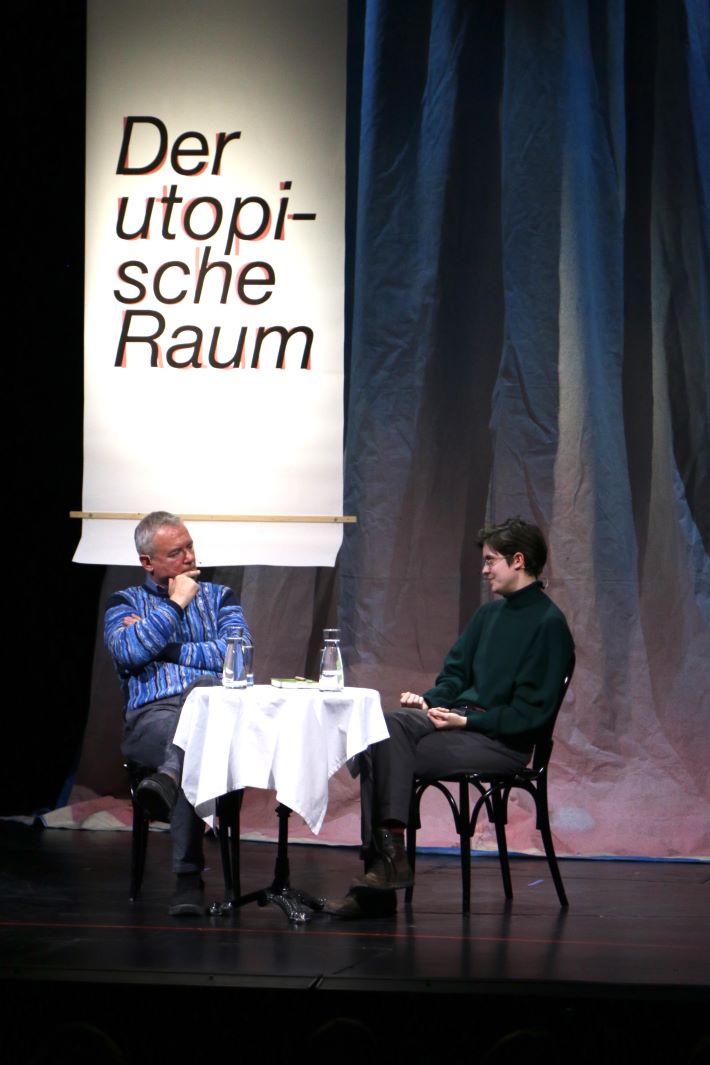
Photo © Globart
30 January 2024 – 7:30 pm
Ilija Trojanow in conversation with Marlene Engelhorn – on money
“One doesn't talk about money, one has it.” This maxim prevents the most human thing we have at our disposal as a society: relationship work. We need to talk about money, because only then can we truly understand why distribution matters and how it affects us personally and as a society. Inheritances worth millions are not a private matter; they reveal a systemic failure. A few families are so structurally and politically privileged that securing their wealth is placed above funding the common good. Money is highly political. Time to talk about it.
Marlene Engelhorn was born into what she calls an over-rich family and is inheriting a multi-million fortune from her grandmother. In 2021 she joined other wealthy individuals to form the initiative taxmenow, taking a public stand for the taxation of wealth and inheritance. In 2022 she published her thoughts and views in a book, and in 2024 it is all about the big question everyone really asks her: what exactly is Marlene Engelhorn going to do with her fortune?
Marlene Engelhorn (31) lives and works in Vienna. Co-founder of the initiative taxmenow (2021), she has since been active in the public debate on tax and distributive justice. Author of “Geld” (Kremayr & Scheriau, 2022).

The conversation has been released as a podcast on Falter Radio and can be heard here.
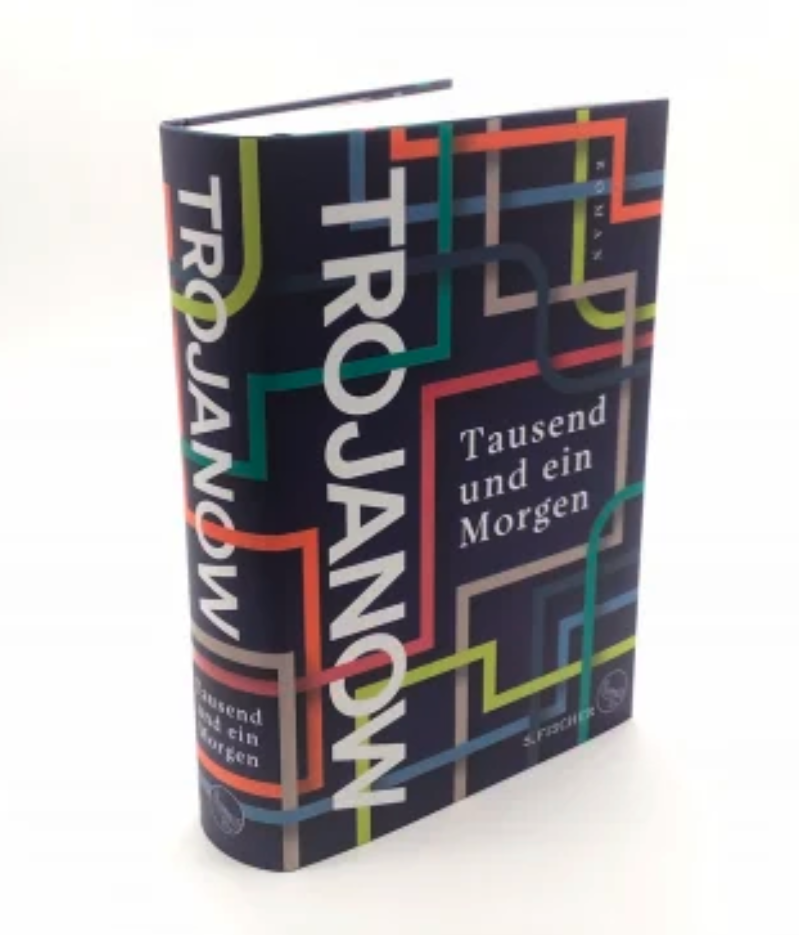
Photo © S. Fischer
25 October 2023 – 7:00 pm
Ilija Trojanow: reading and conversation with Julia Engelmayer – on utopian writing and action
The first edition of “The Utopian Space” in the new season takes place as part of “Blätterwirbel” 2023: Ilija Trojanow reads from his new utopian novel “Tausend und ein Morgen” together with a member of the Landestheater ensemble, followed by a conversation on utopian writing and action, moderated by the Landestheater's head dramaturge Julia Engelmayer.
Ilija Trojanow's new utopian novel sketches a peaceful future in which the man-made crises have already been overcome. From there, the heroine Cya travels back in time – to an Indian metropolis, to spies at the Olympic Games, into the turmoil of the Russian Revolution. Her goal: to make amends for the mistakes of earlier generations.
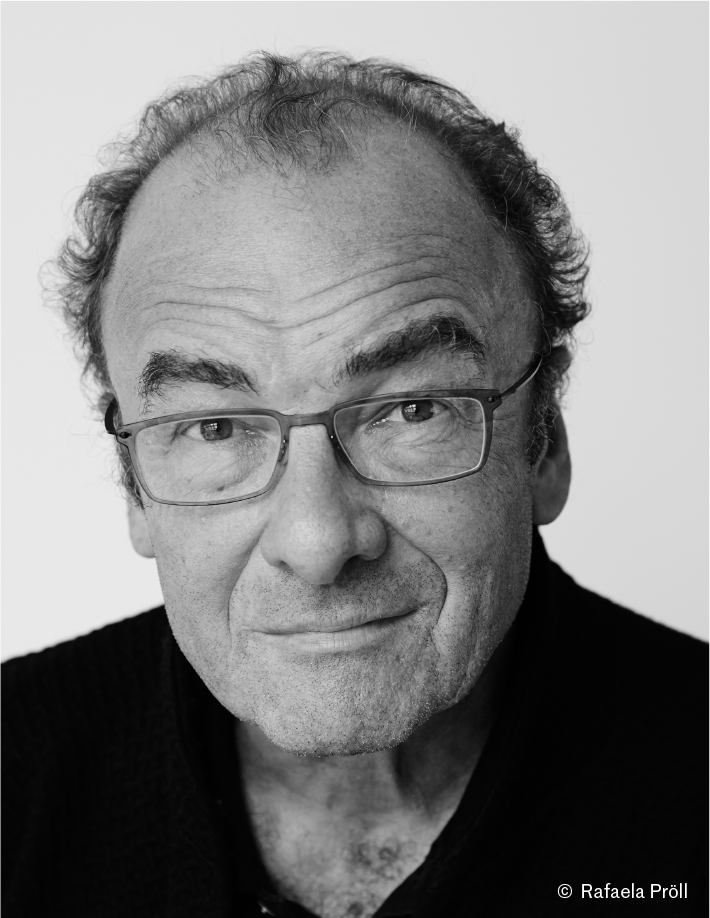
Photo © Rafaela Pröll
7 June 2023 – 7:30 pm
Ilija Trojanow in conversation with Robert Menasse – on the utopia of Europe
“My aim is to be able to narrate Europe. The abysses, all the madness, the joy, the greatness of the idea, the crushing stupidity of some of its representatives,” Menasse told the Süddeutsche Zeitung about his new, second “Europe novel”. Amid sometimes absurd bureaucracies and nationalist rivalries, his essays and novels reflect with great narrative power on the historical conditions of the “peace project Europe” and describe a reality whose utopian core must be won and defended again and again.
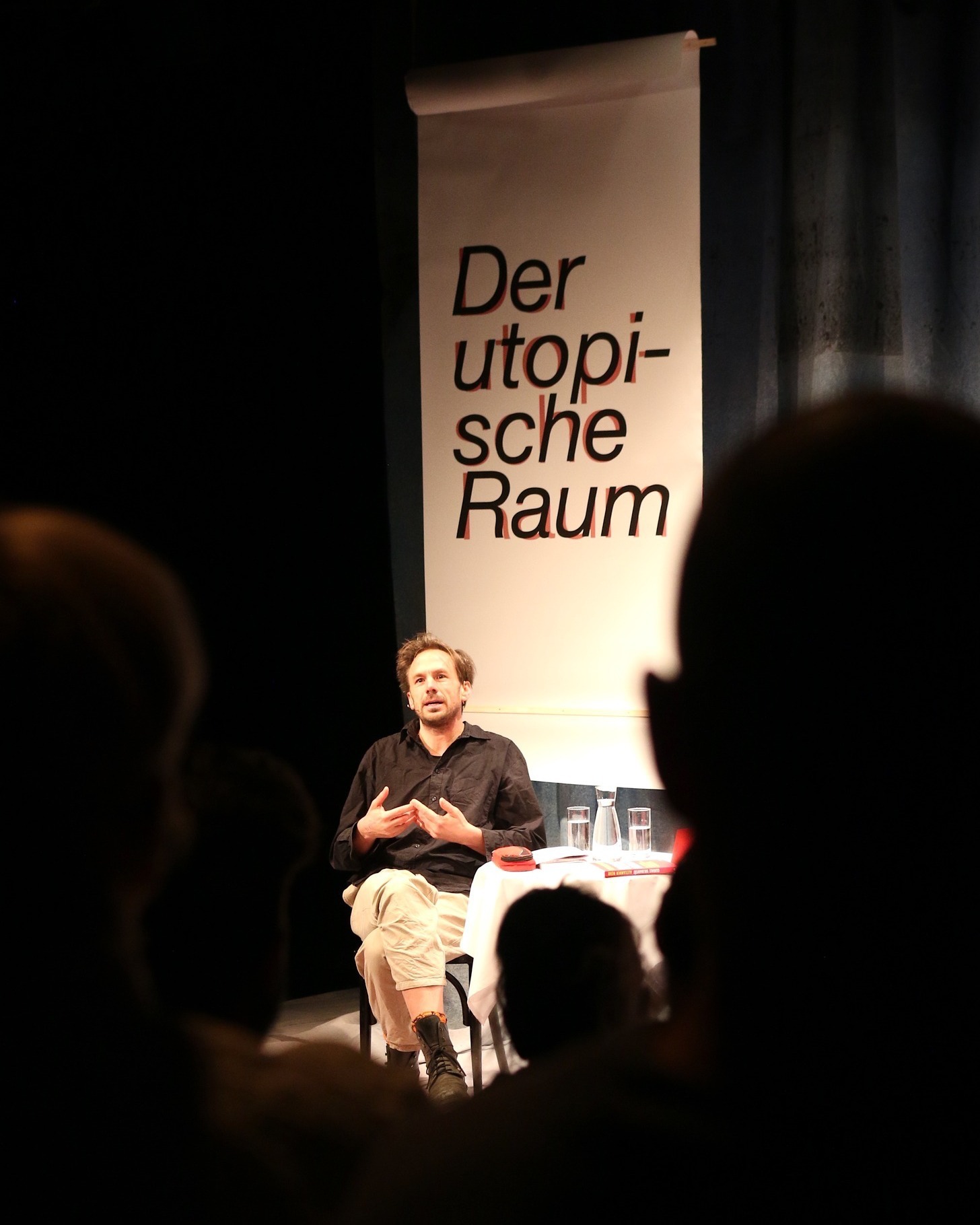
Photo © Globart
19 January 2023 – 7:30 pm
Ilija Trojanow in conversation with Alexander Behr – on global solidarity
“In resistance, utopias are already being lived on a small scale.” In conversation with Ilija Trojanow, Alexander Behr gave a vivid account of the struggle for Lützerath, where a broad alliance of solidarity sought to prevent an entire village – and the lignite beneath it – from being dug up.
Cooking for one another, farming together, self-organisation, help for refugees … in the second “Utopian Space” at Landestheater Niederösterreich, the scientist and activist spoke about many different forms of concrete solidarity that not only give hope in the struggle for a better world, but transform the lives of those affected and of activists alike. The discussion with the audience was very lively – with disappointment at the inconsistency of political decision-makers and passionate pleas for personal and political engagement.
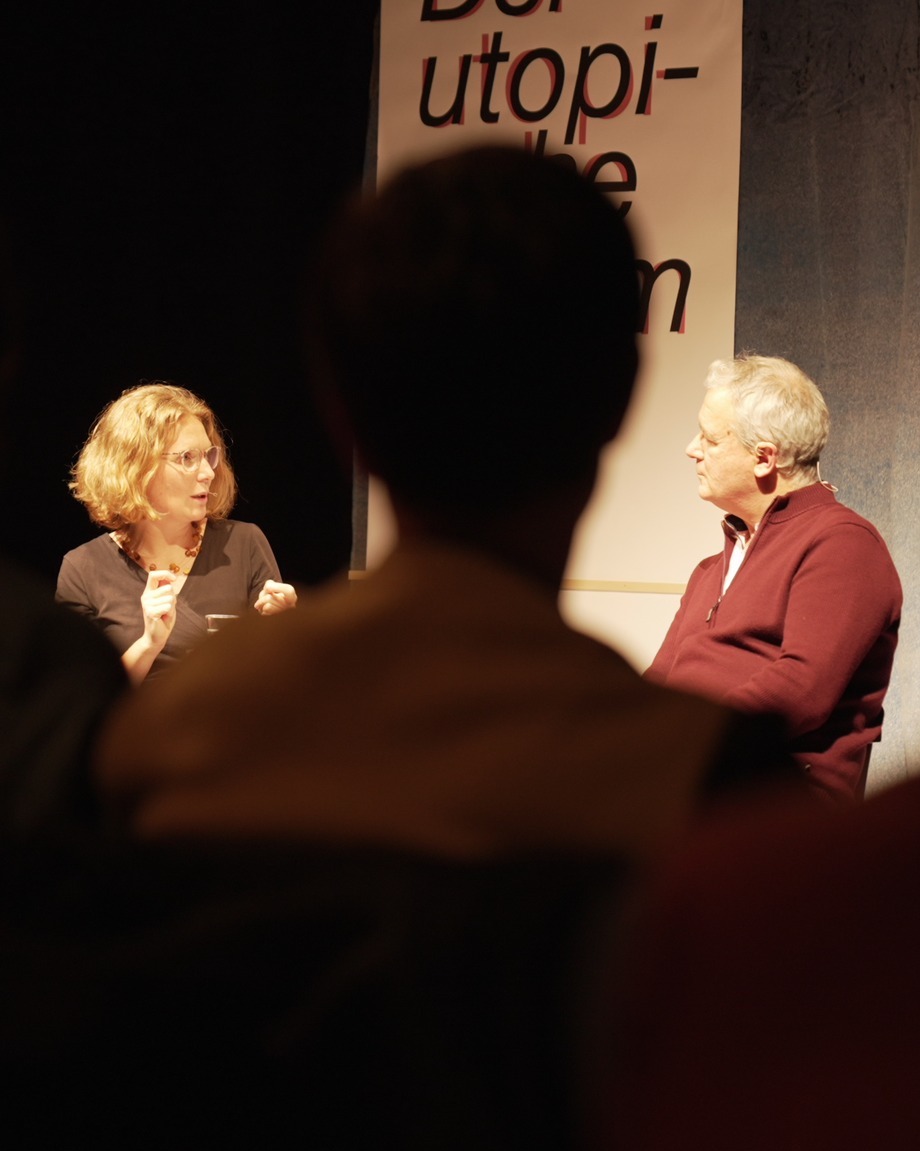
Photo © Globart
3 December 2022 – 7:30 pm
Ilija Trojanow in conversation with Nina Treu – on a good life for all
“We need visions that give us courage, and solidarity-based organisation, to make a good life for all possible.” Nina Treu and Ilija Trojanow opened the first Utopian Space with an intense conversation about real needs and concepts for reducing production and consumption – so-called degrowth. Nina Treu described the essence of utopia not as a goal but as a variant of the status quo that emerges from a situation – as a “What if?”. Ilija Trojanow characterised utopia as a dynamic trigger that, like a domino effect, calls everything around it into question. Engaging with the utopia of a car-free city, for example, also brings the permanent availability of an abundance of goods into awareness – which in turn leads to the question of real needs. Many anecdotes described initially baffling moments as starting points for insightful utopian lines of thought. After the conversation, the audience joined in lively debate about the pros and cons of bans, the need for spaces of encounter and the different paths of climate protest.
Programme
No items found.
In partnership with:
No items found.
Funders:
No items found.
In cooperation with:
No items found.
Sponsors
No items found.
Collaborations
No items found.
Sponsors of the scholarship programme
No items found.
Media partners
No items found.
Become a member now or give a membership as a gift
Globart members benefit from the Globart network and from reduced participation fees at all events.